Waste, grey water and chemical toilet: what do you do with it on the road?
For many, vanlife is about freedom. You drive where you want, sleep where you can, and live simpler than at home. But that freedom only works if we also respectfully handle waste, grey water, and toilet water on the road. To the outside world, this is one of the most sensitive topics surrounding vanlife.
By Laurens De Leeuw · 23 June 2026
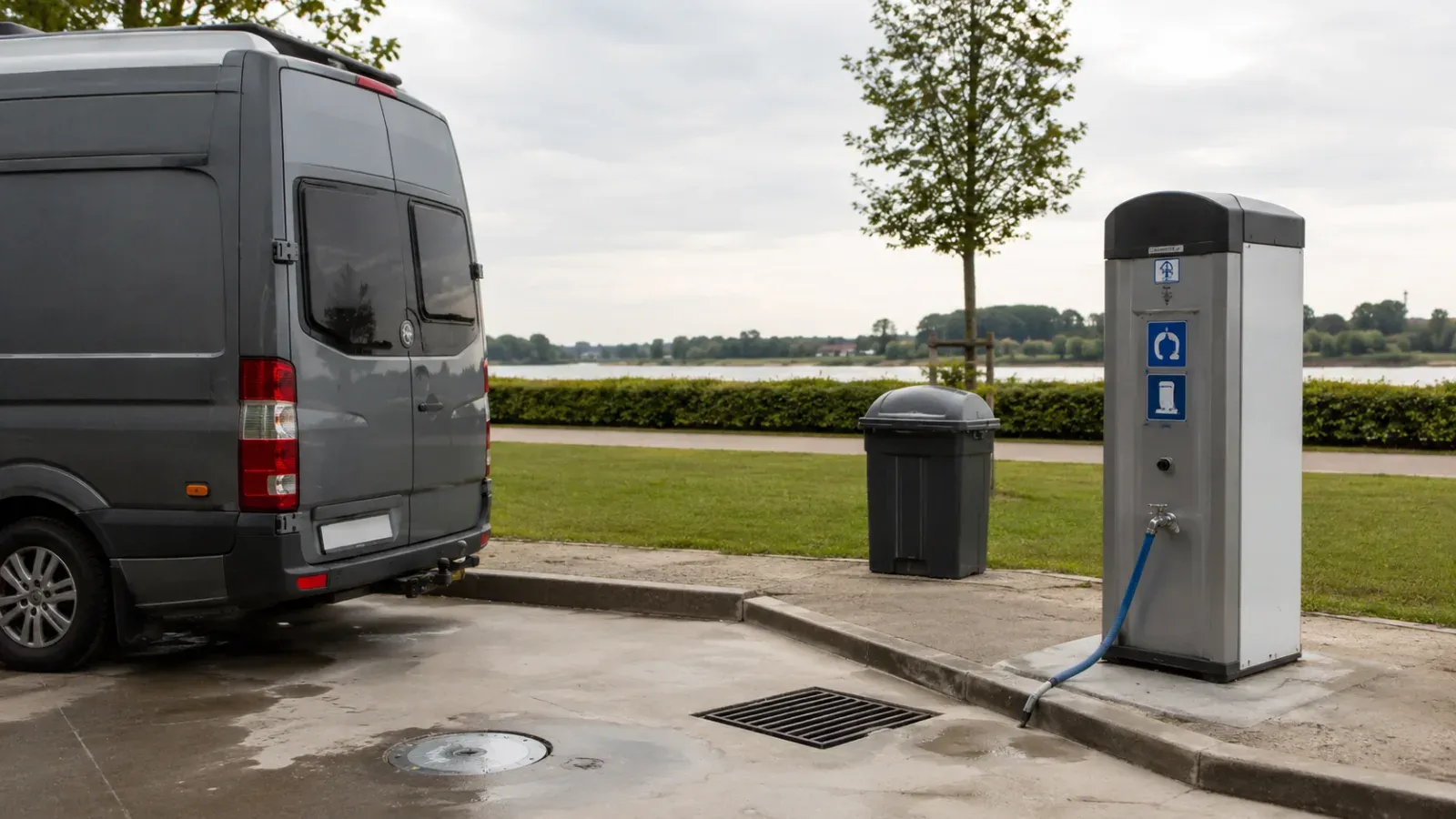
For many, vanlife is about freedom. You drive where you want, sleep where you can, and live simpler than at home. But that freedom only works if we also respectfully handle waste, grey water, and toilet water on the road.
To the outside world, this is one of the most sensitive topics surrounding vanlife. One discarded rubbish bag, one puddle of grey water in a car park, or one incorrectly emptied chemical toilet can be enough to turn local residents, municipalities, or nature managers against vans and campers.
That's why this is not a minor detail. It's basic behaviour.
Anyone living on the road must manage their waste correctly while travelling. Not because it's always convenient, but because it's the only way vanlife in Belgium remains liveable and acceptable.
Why waste is such a sensitive issue
Flanders treats litter and illegal dumping as genuine environmental issues. Litter is small waste left in an inappropriate place. Illegal dumping refers to waste deliberately left in the wrong place, for example, next to a bin, near glass recycling bins, in a car park, at a forest edge, or on a secluded road.
This is important for vanlifers, because on the road, you produce waste just like everyone else. Packaging, food scraps, coffee cups, tissues, cans, bottles, dog waste bags, kitchen waste, and sometimes larger items like broken goods or empty gas canisters.
That waste doesn't disappear just because you live in a van. You simply have to take responsibility for it yourself.
Regular waste: take with you what you cannot dispose of correctly
The simplest rule is also the best: if you can't dispose of it correctly, take it with you.
Use a sturdy rubbish bag or sealed container in your van. Sort PMD, glass, paper, and residual waste where possible. Dispose of small amounts of waste in public bins if they are intended for that purpose, but don't cram full household bags into them. A public bin in a park, on a beach, or in a car park is not intended for collecting all the waste from your entire van.
Leaving waste next to a full bin is also not a solution. That quickly becomes litter or illegal dumping, even if your intention might not have been bad.
A good habit is to plan your waste disposal moments. Stop at a campsite, campervan site, petrol station, supermarket car park with proper facilities, or take your waste home. Especially if you're on the road for several days, waste management is simply part of your route planning.
Food scraps are also waste
Sometimes people think that food scraps can't do any harm because they are “natural”. An apple core, bread crust, banana peel, or leftover pasta seems innocent, but it doesn't belong just anywhere on the roadside, in a car park, or in the forest.
Food scraps attract animals, can smell, sometimes remain for much longer than you think, and make a place dirty for the next visitor. Especially in popular vanlife spots, this can quickly become a problem.
Even biodegradable waste remains waste if you leave it in a place where it doesn't belong.
Grey water: what is it?
Grey water is wastewater that does not come from your toilet. Think of water from washing dishes, washing hands, brushing teeth, showering, or from your sink.
In a van, it sometimes seems harmless. It's just water, isn't it? But in practice, it often contains soap, grease, food scraps, toothpaste, oil, coffee, dirt, shampoo, or cleaning products.
Therefore, you should not simply discharge grey water onto the street, in a roadside verge, in a car park, into a sewer grate, into a stream, or into nature. Even if you use biodegradable soap, it remains wastewater. Bio-soap doesn't suddenly make incorrect disposal clean.
Where should grey water go?
Grey water should be discharged at a designated facility. Think of a service station, campervan site, campsite, or official wastewater disposal point.
Toerisme Vlaanderen states that accommodation sites must be connected to an internal sewage system or be located within 100 metres of a public wastewater disposal point. This clearly shows why official campervan sites and campsites are so important: they provide the very infrastructure you need on the road.
Don't have a disposal point nearby? Then you take your grey water with you until you find one. That requires some planning, but it's part of travelling with your own water system.
A small tip: keep your system simple. Don't use too much water, wipe greasy pans with kitchen paper first, use a sieve in your sink, and make sure your tank or jerrycan is large enough for your travel style.
Chemical toilet: never empty just anywhere
A chemical toilet or toilet cassette should only be emptied at a place explicitly intended for it. This is usually a chemical toilet disposal point at a campsite, campervan site, or service station.
Never empty your cassette in nature, in a roadside verge, into a street drain, into a regular toilet without permission, into a public bin, near a waterway, or behind a hedge.
This is not only dirty, but it also harms the image of everyone travelling with a van or camper. Moreover, chemical products and toilet contents can cause problems if they end up in the wrong place.
Again, plan ahead. Don't wait until your cassette is completely full and you have to frantically look for a solution. If you know you'll be on the road for several days, find out in advance where you can legally dispose of it.
Use less, then you have less to dispose of
Waste management starts even before you have waste.
Bring reusable bottles, cups, and containers. Buy fewer individual packages. Use a fixed bin in your van. Cook simply. Don't pour oil or grease down your sink. Use as little cleaning product as possible. Choose toilet products consciously and avoid aggressive agents if possible.
The less waste, water, and chemicals you use, the less stress you'll have on the road.
That's not only better for nature, but also more practical. A small van has limited space. Anything you don't bring, you don't have to store, sort, or dispose of.
What about public toilets?
A public toilet is not automatically a disposal point for a chemical toilet. Not even if it would be technically possible.
Emptying a toilet cassette in a regular public toilet can cause nuisance due to smell, splashes, blockages, chemical products, and lack of flushing facilities. So don't do it unless explicitly permitted.
Prefer to use a real service station or a place where it is clearly stated that toilet cassettes may be emptied there.
What about street drains and sewer grates?
A street drain or grate along the road is not a convenient drain for your grey water or toilet water. Many people don't know where such a grate leads. Sometimes water goes to the sewer, sometimes to rainwater drainage, a ditch, or surface water.
If you are not sure that a point is intended as wastewater disposal for campers, do not use it.
For vanlife, it's a simple rule: only dispose where it is clearly allowed.
Practical checklist for on the road
Before you leave:
1. Do you have a sealable bin or rubbish bag?
2. Can you store waste separately?
3. Is your grey water tank or jerrycan empty?
4. Is your toilet cassette empty?
5. Do you know where you can dispose of waste on the road?
6. Do you have kitchen paper, bags, and cleaning supplies with you?
7. Do you use as few products as possible that you will later have to dispose of?
Before you leave a spot:
1. Is there nothing around your van?
2. Is there no waste or food scraps left behind?
3. Have you not left any water running?
4. Has your toilet not been emptied in the wrong place?
5. Does the place look like you were never there?
That last point is actually the core: leave no trace.
Why this is important for the community
Vanlife in Belgium stands or falls with behaviour. Municipalities, local residents, and nature managers don't just look at what you intended, but primarily at what you leave behind.
A clean place builds trust. A dirty place leads to complaints, inspections, prohibition signs, and height barriers.
That's why waste management is not a boring side issue. It is one of the most important ways to show that vanlifers can travel responsibly.
Anyone who takes their waste with them, disposes of grey water correctly, and empties their toilet only in the right places helps the entire community move forward.
Conclusion
Waste, grey water, and chemical toilets are part of vanlife. You cannot ignore them because you are on the road.
Only dispose of waste where it belongs. Leave nothing next to bins. Only discharge grey water at an authorised disposal point. Only empty your chemical toilet at a designated place. And always leave as if you were never there.
Freedom on the road only works if you bring responsibility with you.
Source: https://toerismevlaanderen.be/nl/logies/uitbatingsnormen-camperterrein
Source: https://toerismevlaanderen.be/nl/logies/uitbatingsnormen-terreingebonden-logies
Source: https://ovam.vlaanderen.be/handhaving-zwerfvuil2
Source: https://ovam.vlaanderen.be/zwerfvuil-aanpakken
Source: https://www.vlaanderen.be/natuur-milieu-en-klimaat/afval/zwerfvuil-en-sluikstort