Dunes, beaches, forests, and nature reserves: the places where you're most likely to encounter problems
Some places seem made for vanlife. An empty parking lot near the dunes. A quiet forest path. A strip of sand by the beach. A nature parking lot where you see no one in the evening. Your sliding door open, fresh air, silence, and a beautiful view.
By Laurens De Leeuw · 24 June 2026
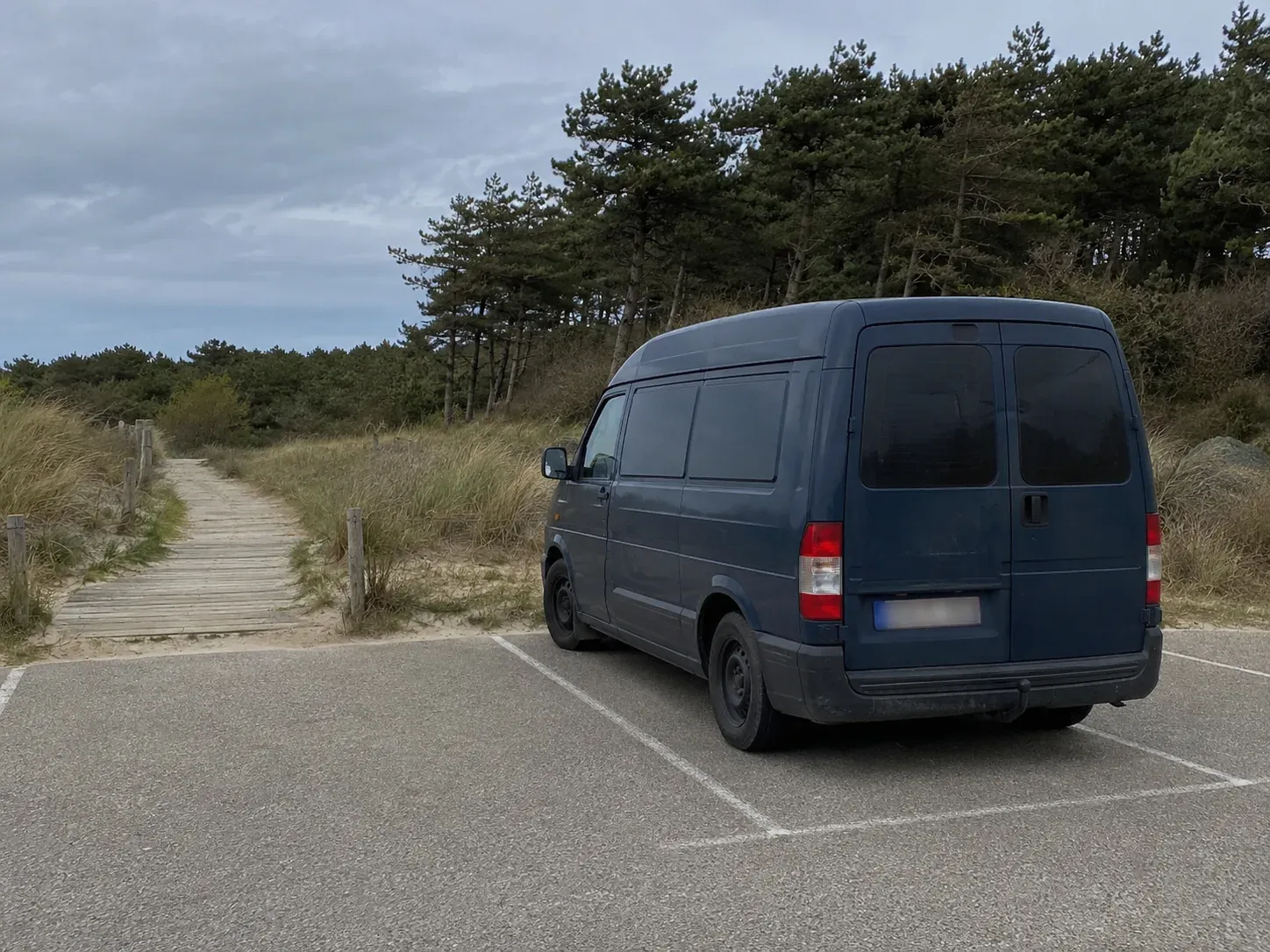
Some places seem made for vanlife. An empty parking lot near the dunes. A quiet forest path. A strip of sand by the beach. A nature parking lot where you see no one in the evening. Your sliding door open, fresh air, silence, and a beautiful view.
However, these are precisely the places where you can most quickly run into problems.
Not because every vanlifer has bad intentions. But because nature, dunes, beaches, and forests are sensitive areas. They are protected, managed, controlled, and often shared with hikers, cyclists, local residents, animals, and vulnerable nature.
For vanlife, the rule is actually simple: the more beautiful, peaceful, and natural a place seems, the more careful you need to be.
Sleeping in your vehicle is not the same as camping in nature
In Belgium, there is no general prohibition against sleeping in a correctly parked vehicle. A power nap or a short rest in a legally parked car can therefore be perfectly logical in itself.
But that doesn't mean you can just spend the night in a nature reserve, forest, dune, or beach zone.
The difference lies in the place and your behavior.
Are you in a regular parking lot where parking is allowed, do you stay inside, and are you just resting? Then you're more in the realm of parking and sleeping.
Are you driving onto a sand path, parking your bus at the edge of the forest, unfolding chairs, cooking outside, or staying until the next day? Then it quickly becomes camping or unauthorized stay in a place where it's not intended.
And in nature reserves, there's a quicker response to this.
Wild camping in forests or nature reserves is not simply allowed
Nature and Forest is clear about this: wild camping or simply pitching your tent in nature is not allowed in Flanders. There are bivouac zones, but these are intended for trekkers who come on foot or by bicycle.
This is immediately important for vanlifers. A bivouac zone is not a campervan site.
So you can't think: "You can spend the night there, so I'll just park my van nearby." Bivouac zones are usually not accessible by car and are intended for people who are hiking or cycling, not for vehicles.
A van or camper belongs in a place where vehicles are allowed to be. Not in the middle of the forest just because there's a bivouac spot nearby.
Forests: stay on the roads and paths
In forests and nature reserves, the basic rule is that visitors may use the designated roads and paths. So you can't just walk anywhere, let alone drive a vehicle onto a forest path or grass verge because it looks quiet.
For a vanlifer, this means very practically:
- do not drive into the forest
- do not park on unpaved paths if vehicles are not allowed there
- do not park on verges or in open spaces
- do not drive past barriers
- do not block paths
- do not cause damage to soil, plants, or roots
A forest parking lot can sometimes be okay for short-term parking. But leaving the parking lot with your vehicle or parking somewhere among the trees is a completely different story.
Nature reserves are not free overnight spots
Nature reserves are for nature, peace, and gentle recreation. Walking, cycling on marked paths, bird watching, enjoying silence. Not for vehicles to stay.
That's sometimes frustrating, because those places are often the most beautiful. But it's also logical. If everyone parks their bus at the edge of a nature reserve, you quickly get damage, nuisance, litter, soil compaction, disturbance of animals, and complaints.
And that, in turn, leads to stricter rules and prohibition signs.
For me, this is truly a piece of community responsibility. We all want beautiful places, but we must not use them to destruction.
Dunes are extra sensitive
Dunes sometimes seem like just sand hills, but they are much more than that.
Along the Flemish coast, many dune areas are ecologically valuable and protected. They are important for plants, animals, coastal protection, and the natural transition between sea, beach, and hinterland.
Therefore, dunes are not a place to park your bus, walk through off-path, camp, or set up your belongings.
Even on foot, you often have to stay on the marked paths. With a vehicle, you have absolutely no business there, except in a truly permitted parking lot.
A dune parking lot can be tempting, especially out of season. But always check the signs. On the coast, local rules are often stricter than elsewhere.
Beach parking lots and sea dikes: pay attention to local rules
Beaches and sea dikes are not ordinary parking lots.
On the coast, municipal rules often apply regarding parking, campervans, overnight stays, access times, beach use, dogs, events, loading and unloading, and seasonal restrictions.
Sometimes you can perfectly park a camper during the day, but not spend the night. Sometimes certain parking lots are only for passenger cars. Sometimes there is a prohibition between certain hours. Sometimes there is an official campervan site nearby, and the municipality wants to prevent campers from being scattered everywhere.
So always read the signs.
And don't rely on "I parked here last year too." Coastal municipalities sometimes adjust rules, especially after complaints or busy summers.
The beach itself: don't do it
Driving your van onto the beach in Belgium is normally not a realistic or permitted vanlife option. Beach access is limited, sensitive, and often only for authorized services, rescue services, maintenance, events, or specific permits.
Apart from the rules, it's also just asking for trouble. Sand, tides, getting stuck, damage to nature, nuisance to others, and quick attention from the police or manager.
A beach is for walking, swimming, or enjoying. Not for parking your bus.
Why you get checked more quickly in these zones
In nature and coastal zones, there is often more supervision than you think.
You can be approached by:
- police
- community guards
- forest rangers
- nature inspection
- site managers
- parking control
- coastal municipality
- private security
- reporting local residents
In an industrial park, you might be less conspicuous. At a dune, forest edge, or nature parking lot, a sleeping van stands out much faster. Especially if there are no other vehicles in the evening or at night.
And if there have already been complaints about campers, checks are carried out more quickly.
The line between discreet sleeping and visible camping
In sensitive zones, you need to be extra discreet.
So no:
- chairs outside
- table outside
- awning open
- cooking next to the bus
- campfire
- music
- leveling blocks
- hanging laundry
- discharging grey water
- emptying the toilet
- leaving litter
- staying multiple nights
- hanging out late outside
Even if parking is allowed, camping behavior can cause problems. Especially in places where only short-term parking or day recreation is expected.
A closed bus that is correctly parked is less conspicuous than a mini camping setup at the edge of the dunes.
Dogs in nature reserves
Many vanlifers travel with a dog. Of course, I immediately think of Grephar. But in nature reserves, you need to be extra careful.
Dogs often have to be kept on a leash, and sometimes dogs are not even allowed in certain areas or periods. This has to do with breeding birds, grazers, vulnerable nature, other visitors, and safety.
So don't let your dog run loose just because it's "quiet anyway."
Check the signs at the entrance to the area. And keep in mind that a large dog, however sweet, can come across differently to other hikers or animals.
Making fire is a bad idea
In forests, dunes, and nature reserves, making fire almost always asks for trouble. Even a small campfire or barbecue can be dangerous, especially during dry periods.
But even outside dry periods, it is often not allowed. Fire leaves traces, causes risk, and attracts attention.
So do not use a fire pit, barbecue, or open flame in nature zones. Even cooking outside with a gas stove can already be seen as camping behavior or a risk in some places.
Want to cook? It's better to do that in a place where it's clearly allowed, such as a campsite, campervan site, or private property with permission.
Wastewater and toilet: absolutely do not discharge
This should be self-evident, but it needs to be said.
Do not discharge grey water in dunes, forests, verges, ditches, beach parking lots, or nature reserves. Never empty a chemical toilet in nature or in a regular waste bin.
That is not only wrong, it is also one of the reasons why vanlifers are no longer welcome in some places.
Take your waste with you. Only discharge at official places. And if there is no place to discharge, keep it until you find one.
A beautiful place does not deserve your dirty water.
Apps are extra dangerous near nature spots
Park4Night and other apps are full of beautiful spots near forests, lakes, dunes, and nature reserves. But it is precisely there that you need to be extra critical.
A pin in an app does not mean that overnight stays are legal. It only means that someone has shared that spot.
Sometimes that spot has long been known to the police or forest rangers. Sometimes there are new prohibition signs. Sometimes the spot was never allowed, but it just wasn't checked.
For nature spots, I would mainly use apps to know where you should be more careful, not as proof that something is allowed.
What if you have to stop for a night anyway?
Sometimes you're just tired. Then you have to stop. Safety comes first.
But then choose a less sensitive place:
- official campervan site
- campsite
- highway parking for a short rest
- regular parking where overnight stays are not prohibited
- private property with permission
- parking at friends' or family's place
- permitted spot outside a nature reserve
If you are near nature or the coast anyway, keep it extremely short and discreet. No setup, no mess, no noise, and leave as soon as you are rested.
But don't make a habit of it.
Why nature spots disappear quickly
Many beautiful places don't disappear because of one quiet vanlifer. They disappear because a place becomes popular.
First, there's one van. Then the spot appears in an app. Then there are five. Then chairs, awnings, and fires appear. Then litter is left behind. Then residents or managers complain. Then there's a check. And then there's a prohibition sign or barrier.
That pattern is seen everywhere.
If we want there to be places where vanlifers are still welcome, we must especially leave sensitive nature spots alone.
Where can you experience nature then?
You don't have to avoid nature. You just have to choose wisely.
You can perfectly:
- park in an official parking lot and hike during the day
- sleep at a campervan site right next to nature
- camp at a campsite at the edge of a forest
- use a bivouac zone if you are trekking on foot or by bike
- book a private spot with a farmer or nature campsite
- spend the night at a permitted site and go into nature from there
- get up early and visit nature without sleeping there
That may be less "wild," but much more sustainable.
What if you are approached?
Stay calm and friendly.
Don't say: "But I was in Park4Night." That doesn't help.
Rather honestly say that you thought you were parked correctly, that you didn't want to bother anyone, and that you will leave if it's not allowed.
Do not argue with the police, forest ranger, nature manager, or municipality. Especially in a nature reserve, you usually draw the short straw if you ignore rules or signs.
Leave cleanly. Leave nothing behind. And do not share the spot as a "good sleeping place" if you were actually sent away.
Common mistakes
A first mistake is thinking that sleeping in a vehicle is allowed everywhere because there is no general sleeping ban.
A second mistake is confusing a nature parking lot with a campervan site.
A third mistake is leaving the paths or driving onto a forest road.
A fourth mistake is thinking that dunes are just empty sandy ground.
A fifth mistake is using coastal parking lots as free campervan sites.
A sixth mistake is relying on old app reviews.
A seventh mistake is letting dogs run loose in vulnerable areas.
An eighth mistake is improperly discharging wastewater or toilet contents.
A ninth mistake is sharing a beautiful spot online, causing it to quickly become overloaded.
Practical checklist
Before staying at dunes, beach, forest, or nature reserve, it's best to check:
- Is parking allowed here?
- Is there a prohibition on overnight stays or camping?
- Is this a nature reserve, dune area, or protected area?
- Am I in an official parking lot?
- Am I not on a path, verge, grass strip, or sand road?
- Are dogs allowed and must they be on a leash?
- Is the place intended for day recreation or also for overnight stays?
- Are there recent local rules or signs?
- Am I not showing camping behavior?
- Am I only staying for a short time?
- Am I not discharging anything?
- Am I not leaving anything behind?
- Can I better look for an official campervan site nearby?
If in doubt, find another spot.
Conclusion
Dunes, beaches, forests, and nature reserves are the places where you, as a vanlifer, are most likely to encounter problems. Not because you can never go there, but because nature and coastal zones are sensitive and often have extra rules.
Sleeping in a correctly parked vehicle is not automatically forbidden, but wild camping in nature is not simply allowed. Forests and nature reserves have paths and access rules. Dunes are vulnerable and often protected. Beach and coastal parking lots often fall under local rules.
My advice: enjoy nature, but don't just sleep in the middle of it. Park where allowed, walk where allowed, leave no trace, and for the night, rather look for a place that is truly intended for staying.
A beautiful place is only truly beautiful if it is still beautiful tomorrow.
Source: https://natuurenbos.vlaanderen.be/faq/mag-ik-kamperen-een-bos-natuurgebied
Source: https://natuurenbos.be/activiteiten/bivakzone
Source: https://natura2000.vlaanderen.be/gebied/duingebieden
Source: https://www.veiligverkeer.be/veilig-rijden/slaperigheid/wegcode-parkeren-slapen-auto/