Generators, music, and nighttime disturbances: how to avoid municipal fines and complaints?
For many, vanlife is about freedom. You park somewhere quietly, put on some music, charge your battery, cook something simple, and enjoy the evening. But for the people around you, that same moment can feel very different.
By Laurens De Leeuw · 25 June 2026
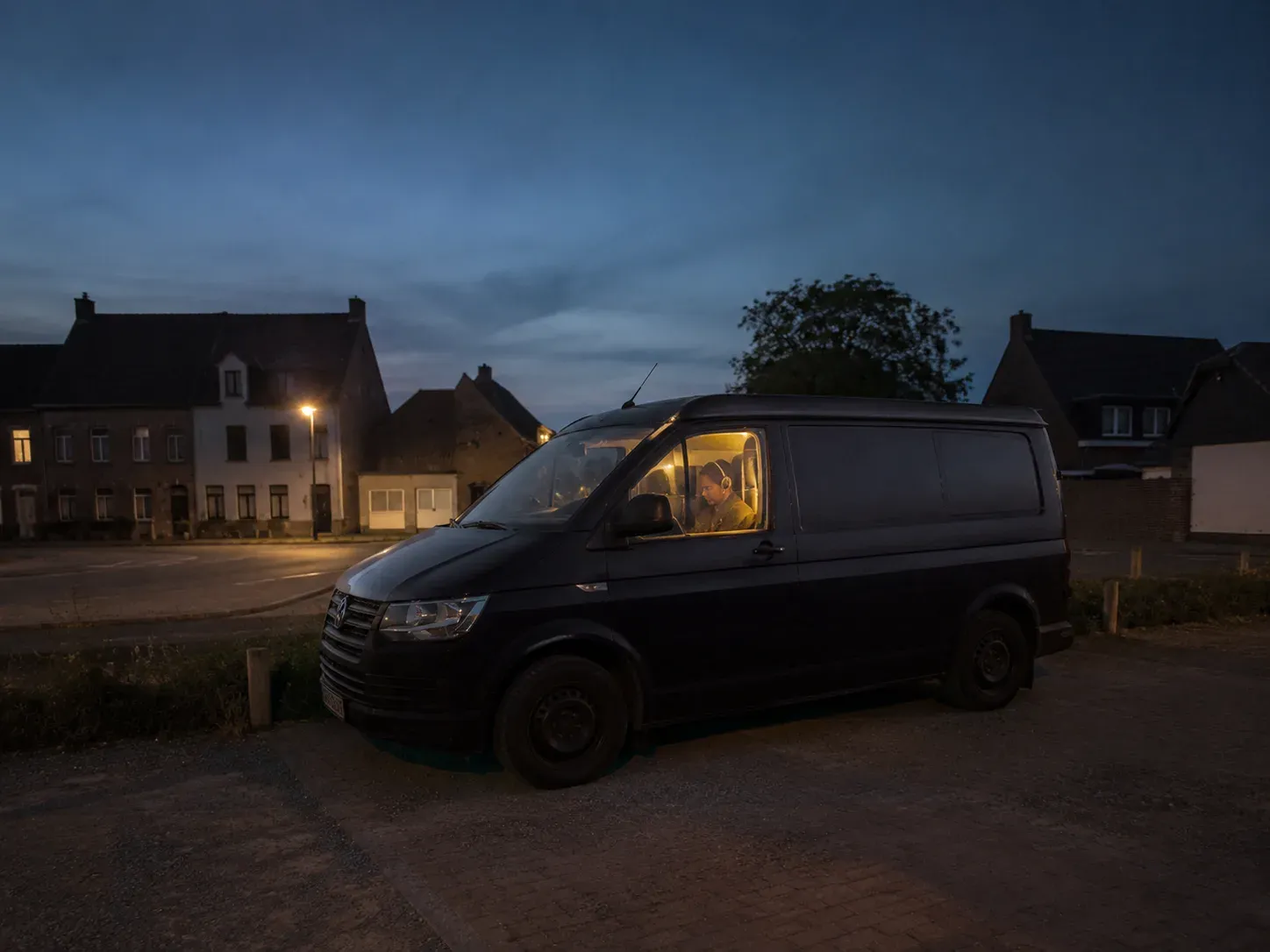
For many, vanlife is about freedom. You park somewhere quietly, put on some music, charge your battery, cook something simple, and enjoy the evening.
But for the people around you, that same moment can feel very different.
A generator humming. Music that's just a bit too loud. The sliding door opening and closing ten times at midnight. A dog barking. A group of people still chatting next to the van. To you, it might seem cozy or harmless, but for local residents, other travelers, or site managers, it can be a nuisance.
And in Belgium, nuisance can lead to complaints, police checks, or a municipal administrative fine (GAS boete).
So, this article isn't about spreading panic. It's about simple, respectful behavior that will lead to fewer problems and ensure vanlifers remain welcome.
What is a GAS fine?
GAS stands for 'Gemeentelijke Administratieve Sanctie' (Municipal Administrative Sanction). Municipalities can use such a sanction to act against nuisance and infringements of their local police regulations.
Think of things like noise pollution, public urination, leaving litter, nighttime noise, improper behavior in public places, or other forms of nuisance regulated locally.
Important: GAS rules differ per municipality. What is strictly controlled in one place might be less of a problem in another. But that doesn't mean you can just take a gamble.
For vanlifers, this is especially important: local rules regarding peace, noise, parking, camping, and public nuisance can directly influence where and how you stay somewhere.
Noise is often the quickest problem
Of all the things that can lead to complaints as a vanlifer, noise is probably one of the quickest.
Why? Because noise is immediately noticeable to others. A silently parked van might not stand out. A van with music playing, a generator running, or people talking outside will attract attention much faster.
Especially in the evening and at night, tolerance is much lower. What bothers no one at 4 PM can be enough for a complaint at 11 PM.
And honestly: that's logical. People want to sleep. Other travelers want peace. Local residents have work the next morning. Not everyone shares your evening rhythm.
Nighttime noise: when do you need to be careful?
Many local police regulations consider the night period from 10 PM to 7 AM as a quiet period. On police pages, you often see these hours mentioned when explaining nighttime noise or disturbances.
But don't interpret that as: anything goes before 10 PM.
Even during the day, disturbing noise can be prohibited if it is excessive, unnecessary, or annoying. A loud speaker in a parking lot at 7 PM can also cause problems, especially if there are homes, other campers, or nature nearby.
The safe rule is simpler: as soon as others can clearly hear you, you need to consider if it's still appropriate.
Music in and around your van
Music is enjoyable. But music travels further than you think, especially in quiet parking lots, in villages, near nature reserves, along water, or in empty places with little background noise.
What sounds pleasant inside your van can be a dull thumping outside. Bass sounds, in particular, travel far. Even soft music can be disturbing at night if someone is trying to sleep.
Practical rule: after evening, keep music quiet inside or use headphones.
Do not place a speaker outside in regular parking lots, nature parking lots, shopping parking lots, beach parking lots, or camper spots where people are close together. At a campsite or festival ground, it might be within the house rules, but even there, you should consider neighbors and quiet hours.
Generators: technically handy, socially usually disastrous
A generator can seem useful. You want to charge your battery, use your laptop, run the refrigerator, or cook electrically. But for vanlife in public or shared spaces, a generator is usually a bad idea.
Why?
A generator makes noise. Often a persistent hum. It emits exhaust fumes. It can smell. It can cause vibrations. It can pose a fire hazard. And it tells everyone nearby: someone has set up camp here.
In a regular parking lot, highway parking lot, beach parking lot, nature parking lot, sports hall parking lot, or in a village, a generator is rarely a good plan.
Even if there's no sign prohibiting it, it can still be considered a nuisance.
When can a generator be used?
A generator is not always forbidden. At some campsites, events, construction sites, or private properties, it may be allowed, sometimes within certain hours and conditions.
But then it must be clearly permitted.
Ask yourself:
- Am I on private property with permission?
- Does the campsite or organizer allow generators?
- Are there specific hours when it's allowed?
- Am I far enough away from others?
- Is the device quiet enough?
- Are exhaust gases safely vented?
- Is there fire safety?
- Is it really necessary?
If you have doubts about multiple questions, don't use it.
For most vanlifers, a better battery, solar panel, charge booster, or shore power connection is much more sensible than a generator.
Leaving the engine running is also not a solution
Some people leave their engine running to charge the battery, heat, or use air conditioning. That is almost as irritating to the surroundings as a generator.
A running engine makes noise, emits exhaust fumes, disturbs others, and quickly looks antisocial. Especially at night or in a parking lot where people are sleeping.
Use your engine for what it's intended: driving. Not as a camping generator.
The sliding door is louder than you think
This sounds trivial, but every vanlifer knows the sound: sliding door open, sliding door closed. And again. And again.
No problem during the day. At midnight in a quiet camper spot, it sounds like you're slamming a warehouse door shut.
Cabinet doors, rear doors, steps, bike racks, dog leashes, cooking utensils, and chairs can also make more noise than you realize.
If you arrive late or leave early, do everything more quietly than usual. Not whispering as if you're in a library, but just being aware that sound seems much louder at night.
Dogs and nighttime peace
If you travel with a dog, it's also part of your noise story.
A dog barking once usually won't bother anyone. But a dog that barks every time passersby, other dogs, car doors, or sounds occur can quickly lead to complaints.
With Grephar, I would pay extra attention to that myself. He's sweet, but a large dog barking in a quiet street or parking lot can quickly sound intimidating or disturbing to others.
Practically: choose quiet places, keep your dog inside if he's irritable, don't let him roam unleashed, and avoid places with a lot of nighttime traffic if he reacts to it.
Camper spot is not a party zone
Even at official camper spots, you need to consider others.
A camper spot means overnight stays are allowed, not that anything goes. Vehicles are often close together. People want to sleep. Some leave early. Others travel with children or dogs.
So even there:
- music soft or off
- no generator unless explicitly permitted
- no loud conversations late in the evening
- no slamming doors
- no mess around the van
- respect for any quiet hours
A camper spot only remains pleasant if everyone shows a little consideration for each other.
Industrial area or empty parking lot? Still be careful
Many vanlifers think that noise is less of a problem in an industrial area or an empty shopping parking lot. Sometimes that's true, but not always.
An industrial area can be quieter at night than you think. Sound travels far between warehouses and empty streets. There might be security. There might be night shifts. There might be homes nearby.
A shopping parking lot can be next to apartments. A sports hall can be next to a residential area. A gas station can have cameras and staff.
Empty doesn't mean noise-free. And publicly accessible doesn't mean you can cause a nuisance there.
Nature reserves: silence is part of the place
In nature reserves, forests, dunes, and quiet landscapes, sound is even more sensitive.
People come there for peace. Animals are disturbed. And a speaker, generator, or loud group immediately stands out.
Even soft sound can be out of place in such a location.
My rule would be: in nature, act as if you are a guest in someone's silence. No music outside. No generator. No nighttime commotion. And if you can't be quiet, it's better to find another spot.
How does a complaint arise?
Complaints usually don't arise from one small sound. They arise from a feeling of nuisance.
For example:
- someone sees a van parked where it's already sensitive
- music is playing
- the sliding door keeps making noise
- people are talking outside
- a dog barks
- a generator hums
- bright lights are on
- chairs are outside
- someone thinks camping is taking place
Then someone calls the police, owner, security, or municipality. And as soon as someone has to come by, you're already 1-0 down.
So you don't just have to think legally. You also have to think socially: how does my behavior look to someone who lives here or is responsible for this place?
Bright light can also be a nuisance
Nuisance isn't just sound.
Bright LED strips, outdoor lights, headlights, reversing lights, or camp lighting can also be disturbing. Especially in dark places, nature parking lots, quiet streets, or camper spots.
Light attracts attention. And attention isn't always useful if you want to stay discreetly.
Use warm, soft light inside. Close curtains. Don't direct outdoor lights towards houses, other campers, or paths. And don't leave your headlights on unnecessarily upon arrival.
Alcohol and groups make everything more sensitive
A few people talking quietly is usually not a problem. A group drinking, laughing, playing music, and hanging out next to the van until late is something else.
Not because fun is forbidden, but because the chance of nuisance becomes much greater.
Especially in parking lots where overnight stays are already a bit of a gray area, you shouldn't create the atmosphere of a mini-festival.
If you're traveling with multiple vans, keep in mind that together you'll stand out much faster. Three vans with chairs between them is no longer a "discreet overnight stay" for a local resident. That looks like a camp.
GAS fine or warning first?
Sometimes you get a warning first. Sometimes the police or security just ask you to leave. Sometimes an immediate report can follow, depending on the municipality, the regulations, the situation, and whether there have been previous complaints.
So don't count on "they'll warn me first."
With nighttime noise, repeated nuisance, or clear rules, it can go faster. And if there are already complaints about campers in that spot, tolerance might be lower.
The best way to avoid a GAS fine is not to argue cleverly. It's to ensure no one has a reason to call.
What do you do if someone approaches you?
Stay calm. Always.
Does someone say your music is too loud? Turn it off and apologize.
Does a local resident ask if you're staying here overnight? Answer friendly and briefly. Explain that you don't want to cause a nuisance and that you'll leave if it's not desired.
Do the police or security come? Cooperate. No long explanations about rights, apps, or "I'm not doing anything wrong." If they ask you to leave, you leave.
A friendly conversation can often prevent something from escalating into a complaint or fine.
Practical rules for quiet vanlife
You make it much easier for yourself with a few simple habits.
- No generator in public places
- No music outside in regular parking lots
- Extra quiet after 10 PM
- Use the sliding door gently
- Chairs and table put away before evening
- No loud conversations next to the van
- Keep the dog calm
- Do not leave the engine running
- No bright outdoor light
- No litter or mess
- One night, no camp
- Leave if someone clearly indicates it's disturbing
That might sound strict, but in practice, it just feels like respectful travel.
What if you have a power shortage?
If you often have a power shortage and are therefore considering a generator, your system is probably not well-tuned to your usage.
Then look at:
- larger house battery
- better charge booster
- solar panels
- shore power at a camper spot or campsite
- more energy-efficient refrigerator
- less heavy appliances
- power bank or power station
- shorter electric cooking
- charging laptop and devices during the day while driving
A generator solves the problem technically, but often creates a new social problem.
For me, that's the core: your electrical freedom should not come at the cost of someone else's night's rest.
What if you want to listen to music?
Feel free to listen to music. But choose the right way.
Inside during the day? Fine.
Earbuds in the evening? Perfect.
Soft music at a campsite within hours? Often possible.
Bluetooth speaker outside in a village parking lot at 11 PM? Bad idea.
A van is small. You don't need to use a speaker as if you're filling a terrace.
What about festivals and meetups?
At festivals, meetups, or official events, the organizer's rules apply. Music or sound may be more part of the atmosphere there. But even there, quiet hours, site rules, safety regulations, and neighbor agreements exist.
A festival camper parking is not a license to run your generator or shout next to your van deep into the night.
Read the house rules and consider neighbors. Even at events.
Common mistakes
A first mistake is thinking that a generator "only hums a little." For others, it's often very disturbing.
A second mistake is setting music too loud inside, making the bass audible outside.
A third mistake is thinking that after 10 PM, only loud music counts. Talking, doors, dogs, and engines can also be a nuisance.
A fourth mistake is confusing an empty parking lot with a place where no one is bothered.
A fifth mistake is acting as if you're on private property at a camper spot.
A sixth mistake is continuing to argue when someone approaches you.
A seventh mistake is forgetting that one complaint can be enough to make a place more difficult for everyone.
Practical checklist for the evening
Before you stay overnight somewhere, it's best to check:
- Are there houses, other campers, or sensitive areas nearby?
- Is there a prohibition or local rule?
- Do I have music off or very quiet?
- Do I not need a generator?
- Is my engine off?
- Is my dog calm?
- Can I limit the use of the sliding door?
- Is there nothing outside that looks like camping?
- Am I not using bright outdoor light?
- Can I leave quickly if someone approaches me?
- Am I not leaving any mess behind?
- Am I only staying for a short time?
If you cannot or do not want to be quiet in a place, it's better to find a place where that fits.
Conclusion
Generators, music, and nighttime disturbances are precisely the things that can quickly lead to complaints or GAS fines for vanlifers. Not because every small movement is forbidden, but because noise and nuisance directly impact others.
GAS rules vary by municipality, but local police regulations can address nuisance, nighttime noise, and disturbing behavior. Especially in the evening and at night, the threshold is much lower.
The best approach is simple: no generator in public places, music inside or with earbuds, quiet behavior after 10 PM, no engine running, gentle use of doors, and always leave if you are approached.
Vanlife only works if we consider the people around us. Staying quietly is often the best way to remain welcome.
Source: https://www.belgium.be/nl/justitie/veiligheid/gemeentelijke_administratieve_sanctie_gas
Source: https://www.wegcode.be/nl/regelgeving/2013000441~yo9af4vjaf
Source: https://www.politie.be/5359/vragen/geluidsoverlast/geluidsoverlast-wat-mag-wel-en-wat-mag-niet
Source: https://www.politie.be/5368/vragen/geluidsoverlast/hinderlijk-geluid-wat-mag-wel-en-wat-mag-niet
Source: https://www.veiligverkeer.be/veilig-rijden/slaperigheid/wegcode-parkeren-slapen-auto/