Setting up a stealth van without making it impractical
A stealth van is a bus that, from the outside, looks as little like a campervan as possible. No striking stickers, no large awning, no camping gear on the doors, and preferably no interior immediately visible through the windows.
By Laurens De Leeuw · 17 July 2026
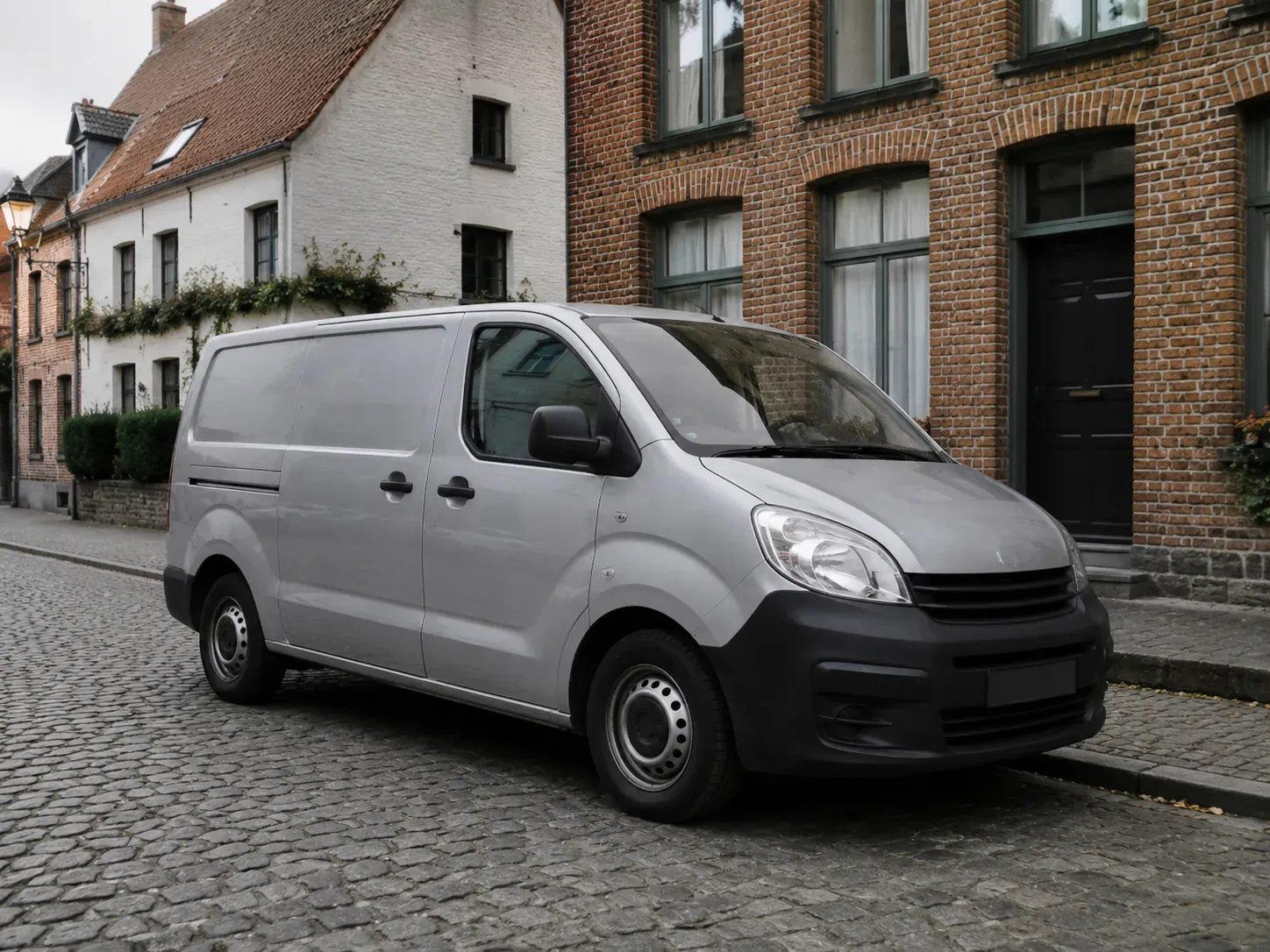
A stealth van is a bus that, from the outside, looks as little like a campervan as possible. No striking stickers, no large awning, no camping gear on the doors, and preferably no interior immediately visible through the windows.
This can be useful. Your van attracts less attention, fits more easily among regular delivery vans, and often feels safer when you store a laptop, camera, or other valuables inside.
But stealth is also quickly approached incorrectly.
Some people make their van so closed off and inconspicuous that they have almost no daylight, ventilation, or room to move inside. Everything has to be hidden, making daily items unreachable. Windows are avoided, the roof hatch is scrapped, and the bed is built in such a way that the sliding door is barely usable.
Then you might have a bus that looks discreet from the outside, but in which you don't enjoy living.
A good stealth van is therefore not invisible. It is simply calm, logical, and discreet. From the outside, it looks like a normal delivery van. Inside, it remains comfortable, safe, and practical.
What does stealth actually mean?
Stealth is not an official vehicle category, nor is it a legal concept.
It mainly means that your van doesn't immediately scream: “someone is sleeping here”.
You usually achieve this by:
- a normal and well-maintained exterior
- few striking camper accessories
- no valuables in sight
- good blackout
- an interior that is not directly visible
- calm lighting
- as little loose camping gear outside as possible
- a layout that you can use entirely indoors
Stealth does not mean you have to disguise your vehicle. You don't need to put a fake company logo on the side or pretend to be a plumber.
A normal, neutral delivery van is usually discreet enough.
Stealth does not make a prohibited overnight stay legal
This is the most important point of the entire article.
An inconspicuous bus does not automatically give you permission to park or stay overnight everywhere. Traffic signs, parking rules, municipal police regulations, and site rules still apply, regardless of what your vehicle looks like.
Moreover, the rules can differ locally.
For example, the local police of Bredene and De Haan state that a motorhome can park where there is no parking ban, but that overnight stays with a campervan on public roads are prohibited there.
Other rules may apply in other municipalities or on specific sites.
Therefore, always check:
- traffic signs
- supplementary signs
- parking duration
- municipal rules
- rules of nature reserves
- rules of the site manager
- any restrictions for vehicle category or MTM
- whether overnight stays are permitted at that location
For a carefree night, preferably use an official camper site, campsite, or private property where you have permission.
Stealth is a way to set up your vehicle discreetly and practically. It is not a method to circumvent rules.
First determine why you want stealth
Not everyone means the same thing by a stealth van.
Perhaps you want to:
- use the bus daily as well
- park easily in a city
- attract less attention
- keep valuables out of sight
- not drive around with a classic camper look
- maintain a simple exterior
- be able to work without your laptop being visible
- a vehicle that still looks like a regular delivery van
These are all valid reasons.
But your design depends on your true goal.
Someone who mainly wants a discreet weekend van can build much simpler than someone who wants to work and live in the bus for weeks. Someone traveling alone needs a different layout than a couple with a dog. And someone who often stays at campsites needs to be less strict than someone who also uses the bus as a daily work or family car.
Therefore, write down beforehand what stealth means to you.
Do you mainly want privacy? Security? A calm exterior? Or a bus that fits in a regular parking space?
This prevents you from sacrificing comfort for a vague idea of invisibility.
Keep the exterior simple
The easiest stealth van is usually just a well-maintained delivery van without too many extras.
A calm exterior, for example, has:
- a neutral color
- no large camper stickers
- no striking decoration
- no items loose on the outside
- no permanent camping setup
- a clean and technically well-maintained appearance
- as few loose cables or accessories as possible
This does not mean that everything has to be completely hidden.
A small roof hatch, solar panel, or fan does not suddenly make your bus unusable as a stealth van. Many commercial vehicles also have roof ventilation, glass carriers, ladders, or other technical components.
It is usually better to have one useful, properly mounted component on your roof than a completely closed bus where you wake up with wet windows and stale air.
Functionality takes precedence over perfect camouflage.
A roof full of equipment, of course, stands out
Stealth and a fully equipped expedition roof are difficult to combine.
Consider:
- large roof rack
- ladder on the rear door
- multiple solar panels
- roof box
- spare wheel
- surfboard
- awning
- satellite dish
- striking lighting
- jerrycans on the outside
Each component can be useful in itself, but together they immediately make it clear that the vehicle is used for travel or camping.
Therefore, choose consciously.
Do you really need a heavy roof rack, or are direct mounts for your solar panels sufficient? Do you use the fixed awning often enough, or can a light tarp be taken inside the bus? Do bikes have to go on the back, or can they be safely stored inside?
A calm roof is not only more discreet. It often also saves weight, wind noise, and fuel.
Windows or no windows?
A closed delivery van without windows is most discreet from the outside. But that doesn't automatically mean it works best from the inside.
The advantages of few windows
- more privacy
- less visibility inside
- less heat loss through glass
- less rapid heating by direct sunlight
- more usable wall space for furniture
- more resemblance to a regular delivery van
The disadvantages
- little daylight
- more difficult to ventilate
- quicker feeling of being enclosed
- no view of your surroundings
- completely dependent on artificial light
- harder to live comfortably inside
- possibly less easy emergency exit
For a bus where you only sleep and mainly live outside, a closed cargo area can work perfectly. If you often want to cook, work, or sit inside when it rains, one well-placed window can provide a lot of comfort.
You don't have to install large camper windows on both sides. One modest window with a ventilation setting can already provide enough daylight and air without the bus immediately looking like a classic camper.
Place windows based on your interior
Don't just place a window in the middle of a wall because it looks nice from the outside.
First, think about:
- where you sit
- where your pillow will be
- where the kitchen is located
- where you want to be able to ventilate
- which side usually faces the street
- where people from outside would look in
- where cabinets or curtains will be
A window above the kitchen can be useful for light and ventilation. A window next to a bench provides a view when you work inside. A small window at the back can help with ventilation around the bed.
For an official conversion to a campervan, glazing and transparent panels must bear a European marking. So inquire before you make holes and order windows yourself.
Prefer to use a correctly placed and approved window than a cheap solution that later causes problems with homologation or inspection.
Use blackout that works quickly
Privacy is one of the most important components of a stealth interior.
You don't want to spend twenty minutes every evening with towels, suction cups, and loose pieces of cardboard.
A practical system can consist of:
- a blackout curtain between the cabin and living area
- fixed curtains along side windows
- magnetic window covers
- well-fitting thermal mats
- a roller blind where technically possible
- dark fabrics that do not let light through
The curtain between the cabin and living area is often the biggest gain.
The cabin has a lot of glass. Without a dividing curtain, you quickly see light, movement, and part of the interior from the outside. With one well-fitting curtain, you make the living area much calmer and warmer.
Make sure your blackout:
- does not hang against a cooking flame
- does not block ventilation openings
- can be removed quickly
- does not fall into the doorway
- is securely stored while driving
- does not retain moisture against windows or walls
Prevent noticeable light leaks
A bus can appear completely closed from the outside, until one bright ceiling light comes on inside and light shines out through every crack.
Therefore, use multiple small, adjustable light sources instead of one extremely bright lamp.
Useful are:
- dimmable ceiling lighting
- a reading lamp by the bed
- lighting above the kitchen unit
- a small night light
- warm, soft lighting
- switches that you can reach from bed
Warm light feels calmer and is more pleasant in the evening. By only using the light you need, your interior also remains much cozier.
Test your blackout once in the dark.
Turn on all the lights inside and walk around your bus outside. Then you'll immediately see where light is still escaping.
Don't turn stealth into a sealed metal box
A van that is completely closed from the outside can quickly become damp and stuffy inside.
Ventilation remains important during:
- sleeping
- cooking
- working
- warm weather
- wet days
- drying clothes
- traveling with a dog
A low roof hatch or a decent roof fan is therefore often the best practical choice. This allows warm and moist air to escape at the top.
Combine this exhaust with a lower air intake, for example via:
- a window ajar
- a vent
- a suitable cabin opening
- a second small ventilation opening
Then you get real airflow.
A closed bus without a visible roof hatch may seem stealthier, but if you have to fully open the rear doors every morning to get rid of condensation, you are ultimately less discreet.
A small, well-placed fan is often the better solution.
Never cook in a completely enclosed bus
Cooking inside is actually convenient for a stealth van. You don't have to set up a table, gas stove, and pans outside, and you are less dependent on the weather.
But you do need to be able to ventilate.
Cooking brings heat, odors, and moisture into your bus. With gas, combustion is added.
Therefore, provide:
- a roof hatch or fan close to the kitchen
- a second opening for fresh air
- sufficient distance from curtains and bedding
- a stable work surface
- a quickly accessible shut-off valve
- a CO detector when working with combustion appliances
- a fire blanket and fire extinguisher
Never use a cooking appliance as a heater.
Stealth does not mean you have to sacrifice comfort and safety to keep everything closed.
Choose a layout that works entirely indoors
A practical stealth van should not be dependent on an open rear door.
A pull-out kitchen at the back can be nice in good weather, but becomes difficult when:
- it rains
- you are in a busy parking lot
- it's cold
- you just want to make coffee quickly
- you want to keep equipment out of sight
A simple indoor kitchen is therefore often more practical.
It doesn't have to be a large camper kitchen. A compact unit with a stove, water jug, sink, and one work surface is sufficient for many people.
The goal is that you can perform a normal evening routine entirely indoors:
- cook something
- eat
- brush teeth
- change clothes
- make the bed
- go to the toilet
- store items
The less you have to set up outside, the calmer and simpler your stay will be.
Do not block the sliding door
This is one of the most important layout rules.
Do not build a bed, cabinet, or kitchen so far into the doorway that you can barely get in normally.
The sliding door is usually:
- your daily entrance
- your largest ventilation opening
- your loading opening
- an important exit
- the place where wet shoes come in
For an official campervan, there are also requirements regarding access and evacuation. If the normal access door is blocked, an alternative exit must be available. Elements that obstruct passage must be easily removable.
Even without looking at the technical rules, a clear passage is simply much more practical.
Test if you can:
- enter with a backpack
- enter with wet shoes
- use the door completely
- get out quickly at night
- not have to climb over the bed
- reach the driver's seat
- safely let a dog or child in
A few extra centimeters of bed are rarely worth ruining your most important access.
Keep a passage to the cabin
A passage to the driver's area is practical and can also serve as an alternative exit if the dimensions and design meet the conditions.
But don't build that passage so small that you can only get through it without a coat.
Consider:
- the position of the front seats
- a possible swivel mechanism
- curtains
- a refrigerator or kitchen unit
- loose shoes
- height difference between cabin and cargo area
- the ability to quickly reach the driver's seat
You don't have to be able to drive away immediately from bed. But you also don't want to have to unload the entire bus before you reach the cabin.
Keep the passage clear of loose bins and cables.
Fixed bed or convertible bed?
Both can work in a stealth van.
A fixed bed
Advantages:
- always ready
- little movement and noise
- bedding stays in place
- plenty of storage underneath
- convenient for longer trips
Disadvantages:
- permanently takes up a lot of space
- quickly turns a small van into a mobile bedroom
- can block the rear doors or passage
- encourages putting a lot of stuff in the garage
A fixed bed works especially well in a medium or large bus, as long as the doorways remain clear.
A convertible or pull-out bed
Advantages:
- more living space during the day
- the bus remains multifunctional
- convenient in a compact vehicle
- can look like a regular bench
Disadvantages:
- daily conversion
- loose mattress parts
- floor must be clear first
- bedding needs to go somewhere
- can be impractical when you are tired
For a small stealth van, a simple longitudinal bench that pulls out is often a good compromise. During the day, a narrow aisle remains free. In the evening, you convert it into a wider bed.
Keep the mechanism simple. Heavy rails, complicated hinges, and loose support legs do not automatically make the system better.
Create enclosed storage, but keep it accessible
Stealth works better when your belongings are not visible through windows or open doors.
That doesn't mean you have to hide everything in one deep cabinet.
Prefer to work with clear zones.
Daily items
These must be accessible in one movement:
- phone charger
- toiletry bag
- jacket
- shoes
- drinking water
- coffee supplies
- flashlight
- keys
- dog leash
- toilet paper
Less frequently used items
These can be further away:
- tools
- spare parts
- extra blankets
- seasonal clothing
- camping equipment
- supplies
Technical components
These must be out of sight but always accessible:
- battery
- main fuse
- fuse box
- charge controller
- inverter
- water pump
- shut-off valves
- heating
A technical installation behind a glued wall is not stealth. It's just inaccessible.
Use inspection hatches or screwed panels.
Avoid open shelves
Open shelves look cozy in photos, but are rarely the best choice in a moving vehicle.
They cause:
- visible items
- clutter
- rattling
- objects that can fall
- extra work before every trip
- visibility inside when the door is open
A few small decorative items are fine, of course, but daily storage works better behind a door, in a bin, or in an elastic net.
Choose good latches so that cabinet doors and drawers remain closed even during heavy braking.
Create a discreet dirty zone
A stealth interior only remains calm when wet and dirty items immediately have a place.
Provide near the sliding door:
- a rubber mat
- low shoe rack
- hook for a jacket
- towel
- small trash bag
- place for a dog leash
- breathable laundry bag
This way, you don't have to walk through the entire van with muddy shoes, and wet items don't end up on your bed.
Use materials that are easy to clean. A light wooden floor can be nice, but at the entrance, you mainly want something that can withstand water and dirt.
A toilet must be hidden and accessible
Hiding a toilet completely sounds discreet, but it must also remain usable.
Don't put it under:
- three bins
- your entire bed
- a heavy cooler
- a bicycle
- a cabinet for which you first have to dismantle the table
A compact toilet can, for example:
- under a bench
- behind a cabinet door
- in a pull-out compartment
- in a fixed technical compartment
Make sure you can use it at night without having to rearrange the entire bus.
Privacy inside the van is also important. Especially when traveling with two, a small curtain or simple partition can make a big difference.
Keep the water system small and logical
A stealth van usually doesn't need an enormous water system.
Loose water bottles are often practical because they:
- are easy to fill
- are removable
- are easy to clean
- do not require a conspicuous external connection
- can be adapted to the length of your trip
A small submersible pump or simple tap may be sufficient.
If you want a fixed tank, ensure that:
- the filler opening is discreet but accessible
- the tank is securely fastened
- you can clean the tank
- connections remain accessible
- you can properly collect wastewater
- leaks do not reach your electrical installation
A complicated installation does not become better because no one sees it from the outside.
Hide power, but don't make it inaccessible
A house battery and electrical installation belong out of sight. That is safer and calmer.
But they also need:
- ventilation according to the regulations of the material used
- sturdy mounting
- correct cables and fuses
- maintenance access
- space around connections
For example, place the installation under a bench or in a technical cabinet with a removable panel.
Avoid having to lift your mattress every time to check a fuse.
Outlets and USB connections don't have to be conspicuous. One well-placed charging point at the table and one by the bed are often more practical than providing connections everywhere.
Solar panels can be quite discreet
A low-mounted solar panel is often barely noticeable from street level, especially on a high delivery van.
You don't always need a large roof rack. Direct, secure mounting can be simpler, lighter, and more discreet.
Consider:
- sufficient mounting
- cable routing
- roof fan
- shade from other roof components
- total roof load
- maintenance
- homologation where applicable
Don't automatically fill the entire roof. First, calculate how much power you actually need.
A small installation that suits your use is often smarter than an impressive system that mainly adds weight and costs.
Do you work from the van?
Then you need to think extra about visibility, light, and internet.
A practical workspace has:
- a table at a good height
- a comfortable seating area
- sufficient daylight
- a curtain or cover against visibility inside
- power outlet or USB-C
- fixed place for router or hotspot
- storage space for laptop and documents
- a screen that is not directly facing outwards
Put your laptop out of sight after working.
Police advise not to leave valuables such as laptops, mobile phones, and cameras visible in a vehicle. A stealth exterior helps little when you look directly at expensive equipment through the window.
For example, use a lockable or hidden compartment that is not immediately visible when a door is opened.
Safety is more than looking inconspicuous
A bus that looks like a regular delivery van is not automatically safe against burglary.
Take at least these basic measures:
- always lock all doors
- do not leave a bag or electronics visible
- use the original locking correctly
- do not store spare keys in the bus
- do not leave your documents loosely in sight
- place heavy valuables in less visible storage
- park in a place where you feel safe
- leave when a place doesn't feel right
Extra locks can be useful, but check if they are suitable for your vehicle and do not make the doors unsafe or unusable.
Never block your own exit from the inside with a system that you cannot quickly open in a panic.
Make sure your van looks used, but well-maintained
A bus doesn't have to be sparkling new to be discreet.
A regular, well-maintained delivery van often attracts less attention than:
- an extremely dirty bus
- a vehicle full of rust
- curtains visible from all sides
- cables hanging outside
- cardboard against the windows
- loose items on the dashboard
- a permanently open roof hatch with improvised construction
Stealth is mainly about calm.
A neat exterior, correct lighting, normal parking posture, and no loose clutter make more difference than complicated camouflage.
Avoid false business advertising
Some people think that a fictitious company logo makes their bus more credible as a work vehicle.
That also has disadvantages.
A bus with advertising for tools, technology, cameras, or building materials can actually give the impression that there are valuable items inside. Moreover, you should not invent a business identity that could cause confusion.
A completely neutral bus is usually simpler.
If you still want something on the outside, keep it general and honest. But for true stealth, no striking message is usually the best message.
Noise makes a bus less discreet and less comfortable
Loose cabinet doors, rattling pans, and sliding bins are not only heard while driving. Even in the evening, every small sound can sound loud in a quiet environment.
Therefore, work with:
- rubber bumpers
- decent cabinet latches
- anti-slip mats
- fabric between pans
- fixed holders for bottles
- soft storage bins
- securely fastened cables
- a water pump on vibration dampers
Close doors quietly and organize your belongings before dark.
That's not about hiding. It just makes your stay more pleasant and prevents you from causing unnecessary nuisance.
Insulation and stealth go well together
A delivery van without camper windows can be thermally interesting, but insulation remains necessary for comfort and condensation management.
Pay attention to:
- large metal surfaces
- roof
- floor
- wheel arches
- doors
- thermal bridges
- ventilation under the mattress
Don't make the insulation so thick that you unnecessarily lose a lot of living space inside.
A discreet vehicle that is damp and freezing cold inside quickly becomes impractical. Combine reasonable insulation with good ventilation and window covers.
Don't build for one perfect night
A stealth layout must also work when:
- it rains
- you have to cook inside
- you have wet shoes
- the battery is almost empty
- you arrive late
- you want to leave early
- you are sick
- two of you are inside at the same time
- a dog comes in wet
- you are on the road for several days
Therefore, test more than just the bed.
With a temporary setup, pretend you live an entire evening in the van:
1. Enter with a jacket and shoes.
2. Make food.
3. Clean up the kitchen.
4. Use the toilet.
5. Blackout all windows.
6. Set up the bed.
7. Get water without moving everything.
8. Try to reach the cabin and exit.
9. Get up in the morning and make coffee.
Then you'll quickly notice if your design is practical or only seems stealthy on paper.
A practical layout for a small stealth van
In a small delivery van, I would keep the interior simple and modular.
A usable base:
- longitudinal bench against one side wall
- bench that extends into a bed
- clear sliding door opening
- compact cooking box or kitchen behind the driver's seat
- loose water bottles
- toilet under the bench
- enclosed storage under the bed
- blackout curtain behind the cabin
- small roof hatch or safe ventilation opening
- as few fixed overhead cabinets as possible
During the day, a narrow aisle remains free. In the evening, you slide out the bed.
Use light bins instead of heavy wooden drawers and ensure that all loose parts are secured while driving.
A practical layout for a medium-sized stealth van
A medium-sized bus offers a bit more comfort without immediately feeling like a large motorhome.
A logical layout could be:
- fixed bed or pull-out bed at the back
- narrow kitchen unit on one side
- small seating area
- clear passage from sliding door to cabin
- technical compartment under the bench
- enclosed overhead cabinets
- one modest window
- low roof hatch with fan
- curtain between cabin and living area
For a fixed bed, ensure sufficient space at the doorway. Do not let the bed protrude into the entrance hole.
A practical layout for a large delivery van
A large high delivery van will be more quickly recognized as a potential camper from the outside. This doesn't have to be a problem.
Here too, a calm interior can remain discreet:
- regular exterior
- no overcrowded roof
- fixed bed at the back
- compact kitchen unit
- small bench
- technical parts under the bed
- enclosed storage compartments
- good blackout
- clear sliding door and cabin passage
- one clear ventilation system
Try not to completely fill the larger space. A clear floor and calm walls make the van more practical and lighter.
The biggest mistakes in a stealth setup
No ventilation provided
A completely closed bus quickly becomes damp and stuffy.
Not allowing daylight
That can work for short nights, but becomes unpleasant when you sit inside for longer.
Half-blocking the sliding door
A few extra centimeters of bed are rarely worth the loss of your most important access.
Hiding everything too deeply
Daily items and technical components must remain accessible.
Thinking that stealth guarantees safety
Still, do not leave valuables visible and lock your vehicle properly.
Thinking that stealth changes rules
A discreet vehicle is not automatically allowed to stay overnight where it is prohibited.
Adding too many accessories
A bus with a ladder, awning, five solar panels, and bikes on the back is no longer particularly inconspicuous.
Being completely dependent on outdoor cooking
Then you have to open your camping setup for every meal.
Not providing a place for wet items
This quickly leads to shoes, jackets, and towels ending up on your bed.
Permanently blacking out everything
Privacy is nice, but during the day you also want daylight and a view.
A simple stealth base that works for many people
For a first conversion, I would start with:
- neutral delivery van
- no striking stickers
- one low roof hatch or roof fan
- blackout curtain behind the cabin
- well-fitting window covers
- simple longitudinal bench or fixed bed without blocking the doorway
- compact indoor kitchen unit
- enclosed storage
- toilet that is quickly accessible
- loose water bottles
- dimmable warm lighting
- battery and fuses behind a service hatch
- laptop and valuables out of sight
- clear passage to door and cabin
That's not spectacular, but it works.
And that's what makes a good stealth van strong: there's little that unnecessarily attracts attention, but nothing you need daily is missing inside.
Stealth should increase your freedom
A stealth van is successful when you don't constantly have to be concerned with stealth.
You get in, cook, work, sleep, and clean up without constantly putting things outside or crawling through too small an opening. You have privacy, but also air and daylight. Your equipment is out of sight, but not behind an inaccessible wall.
Keep the exterior calm and the interior logical.
Don't sacrifice ventilation, safety, passage, or sleeping comfort to hide a few camper features. A small roof hatch is less problematic than a wet mattress. A well-placed window is better than a dark bus where you never like to sit. A clear sliding door is more important than a bed that is ten centimeters wider.
Ultimately, stealth is not about disappearing.
It's about building a regular, discreet van that you can use comfortably without unnecessarily standing out.
Source: https://www.wegcode.be/nl/regelgeving/1975120109~hra8v386pu
Source: https://www.politie.be/5450/vragen/parkeren/mag-ik-met-een-motorhome-parkeren-bredenede-haan