Insulation in your van: what really helps and what is overrated?
Insulation is one of those topics where beginners quickly get lost. One person swears by Armaflex, another by sheep's wool, yet another says cork is “the most natural,” and on YouTube, it sometimes seems like you can't even survive one night in a van without five layers of high-end material.
By Laurens De Leeuw · 16 July 2026
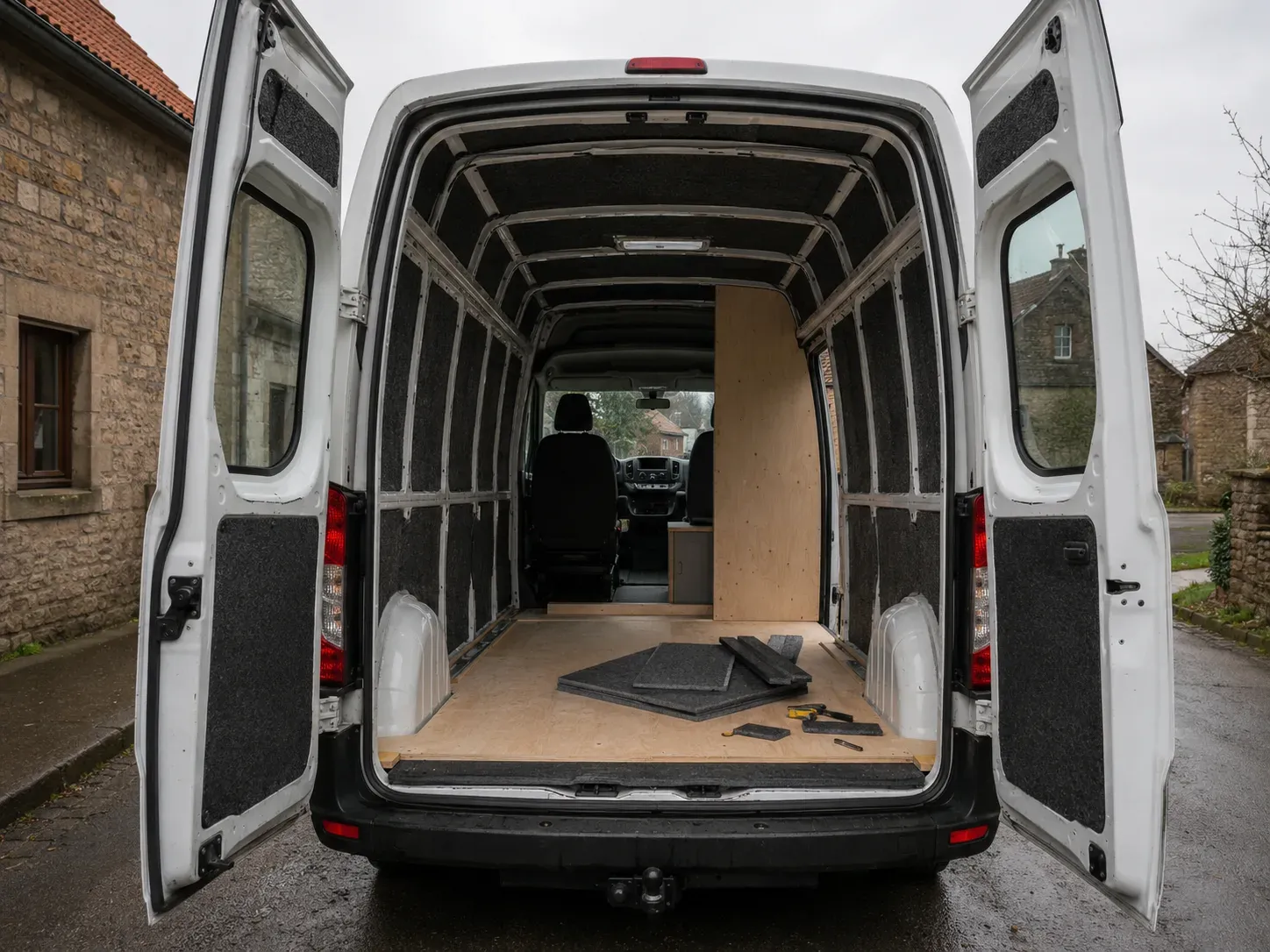
Insulation is one of those topics where beginners quickly get lost. One person swears by Armaflex, another by sheep's wool, yet another says cork is “the most natural,” and on YouTube, it sometimes seems like you can't even survive one night in a van without five layers of high-end material.
Fortunately, the truth is much simpler.
Good insulation really helps. But it doesn't do everything. A van is not a house. It remains a metal box with windows, doors, gaps, and thermal bridges. You can make it much more pleasant, but you'll never turn it into a perfectly insulated home.
So the real question isn't: what is the best insulation in the world?
The real question is: what really helps in a van, and what is mostly theory, marketing, or overkill?
Why you insulate at all
Many people only think about heat, but insulation does more than that.
It helps to:
- keep warmth inside a little longer in cold weather
- keep heat outside a little longer in warm weather
- better control condensation
- make surfaces less icy cold
- make the van feel more pleasant and even-tempered
- dampen sound a bit, although that's not its main task
That sounds good, but there's an important nuance right away.
Insulation doesn't create heat.
Insulation doesn't create coolness either.
It only slows down how quickly heat transfers.
In winter, that means: your warmth disappears less quickly.
In summer, that means: the heat penetrates less quickly.
But if it's cold inside and you're not heating, it will stay cold. And if you heat your van in full sun without ventilation or shade, it will eventually just get hot.
For me, that's perhaps the most important mental switch with van insulation: insulation is useful, but it's always only one part of the system.
A van is not a house
That's something you should accept as soon as possible.
In a house, you have thick walls, a sturdy building envelope, few thermal bridges, large mass, fixed ventilation solutions, and a relatively stable indoor climate. In a van, you have:
- thin sheet metal
- a lot of metal
- window surface
- doors that are not perfectly insulated
- ribs and pillars that transfer cold
- little volume
- rapidly changing outdoor temperatures
- a lot of moisture from breathing, cooking, and wet items
As a result, everything happens faster.
Your van heats up faster. It cools down faster. It gets condensation faster. And small errors in ventilation or moisture management are noticed more quickly.
That doesn't mean insulating is pointless. It just means you need to have realistic expectations.
What insulation really does well in a van
Good insulation primarily makes your van more comfortable.
You often notice this in small things:
- the walls feel less cold
- the temperature drops less abruptly as soon as it gets dark
- your heating has to work less hard
- you get less “radiant cold” from bare metal
- the interior feels less damp
- sleeping feels more pleasant
- warm and cold peaks are slightly flattened
Especially in Belgium, where you often deal with humid air, cool nights, and transitional seasons, that really makes a difference.
So you don't have to think in terms of “unusable without insulation, perfect with insulation.” Think instead: a well-insulated van lives more calmly and pleasantly.
What many people overestimate
There are also things that are often exaggerated.
1. Thinking that insulation solves condensation
No. Insulation alone does not solve condensation.
Condensation occurs when warm, moist air comes into contact with cold surfaces. In a van, you exhale moisture, you cook, you sometimes dry wet items, and sometimes a dog or a second person sleeps inside. That moisture has to go somewhere.
Insulation does help because surfaces don't get extremely cold as quickly. But without ventilation, moisture will continue to accumulate.
So if you think: “I'm going to insulate well, then I won't have condensation anymore,” you're going to be disappointed.
Ventilation remains essential.
2. Thinking that the thicker, the better
More insulation is not automatically better.
In a house, you often just want a higher insulation value. In a van, you also need to consider:
- available space
- weight
- practical construction
- moisture behavior
- efficiency per extra centimeter
The first few centimeters usually make the most difference. After that, you often get less and less extra gain per centimeter, while you lose living space.
In a small van, excessively thick insulation can cause you to lose precisely those few centimeters you needed for comfort or storage space.
3. Thinking that one “magic” product solves everything
That's pure marketing.
There is no miracle material that simultaneously:
- is super thin
- insulates perfectly
- stops all condensation
- completely dampens sound
- is cheap
- is easy to install
- is fire safe
- does not absorb moisture
- is ecologically perfect
Every material choice is a compromise.
4. Thinking that sound insulation and thermal insulation are the same
These are two different things.
Some materials do a bit of both, but not in the same way. Heavy vibration-damping mats, for example, help against resonance and panel vibration, but are not good thermal insulation in themselves.
Many people stick heavy damping mats everywhere and think their van is now “fully insulated.” That's not true.
They can be useful in a few strategic places for sound and vibrations, but they don't replace real thermal insulation.
What really helps?
If we were to reduce all discussion to the things that really matter in practice, these are the main points for me.
1. A decent base layer against cold metal surfaces
Metal conducts heat very quickly. Bare sheet metal parts and ribs therefore quickly become cold or warm.
A good first step is an insulation layer that fits snugly against the metal and doesn't immediately cause moisture problems. That's why many DIY builders choose closed-cell material such as elastomeric foam, because it's flexible, relatively easy to stick, and doesn't absorb water quickly.
The major practical advantages are:
- it conforms to curved surfaces
- it's relatively easy to apply cleanly
- it absorbs little moisture
- it helps against direct cold from metal
- it works well as a base on large panel areas
You don't necessarily have to cram every small corner extremely full. Treating large, logical surfaces correctly often yields more than obsessively trying to seal every mini-channel.
2. Ventilation, ventilation, ventilation
I keep repeating it because it's so important.
A good roof hatch, a fan, or at least a system where you can always circulate air, is often more important than another extra centimeter of insulation.
Especially at night.
Even a well-insulated van gets damp if two people sleep in it with everything sealed tight.
What really helps:
- a roof hatch or roof fan
- a window that can be left ajar
- air intake and air outflow
- air behind mattress and furniture
- the habit of airing out in the morning
- not letting wet items pile up inside
I would personally rather sleep in a reasonably insulated van with good ventilation than in a heavily insulated van without air circulation.
3. Taking the floor and ceiling seriously
Many people focus mainly on the side walls because they are visible and large. But in practice, the floor and ceiling are also important.
The floor
You immediately feel a cold floor. Especially in Belgium, where you often stand on cold, damp ground.
A floor construction with:
- thin but decent insulation
- a stable subfloor
- a neat finish
makes the van much more pleasant.
You don't have to make an extremely thick construction, but doing nothing at all is also rarely smart.
The ceiling
Heat rises, and through the roof, you also get a lot of solar heat in the summer. A properly insulated ceiling therefore really helps.
Because the roof is often quite flat, it's also usually a place where insulation can work relatively efficiently.
4. A mattress that can breathe
This is surprisingly often forgotten.
Many condensation problems seem like “wall problems,” but are actually under the mattress. You sleep on a warm, moisture-producing mass above a cold surface. If there's no air circulation there, you quickly get moisture under your bed.
What really helps:
- slatted base
- ventilation mat
- perforated base
- lifting the mattress occasionally
- air around and under the bed
A perfectly insulated wall helps little if your mattress is wet underneath.
5. Shade and sun management in summer
For summer comfort, insulation is often overestimated and shade underestimated.
If you park your van in full sun, your windows and metal will still absorb heat. Insulation helps a bit then, but your best gains often come from:
- smart parking in the shade
- reflective window covers
- shielding windows
- ventilating
- not cooking inside during heat
- letting air move during the day
A white or light exterior color also helps more than people sometimes think.
So if you're mainly thinking about summer comfort: don't just start with wall insulation. Start with sun, glass, and ventilation.
Which materials are popular and how should you view them realistically?
I'm not going to pretend there's one holy grail here. But I will honestly look at the most common choices.
Closed-cell foam such as elastomeric foam
This is popular for a reason.
It's practical, relatively neat, and often a logical choice in a van.
Strengths
- good contact with the metal
- flexible
- easy to work with on curved shapes
- absorbs little moisture
- combines insulation and vapor barrier properties
- neat for walls, ceiling, and doors
Weaknesses
- not cheap
- you can quickly want to use too much of it
- it doesn't completely solve thermal bridges
- thick layers are not always necessary
- with poor installation, you lose benefits
For many DIY builders, this is simply a safe and practical basic solution.
Mineral wool, glass wool, rock wool
In homes, these are very normal. In vans, they are more sensitive as a point of discussion.
Why people still use it
- readily available
- insulating
- relatively affordable
- also acoustically useful
Why many vanlifers are cautious
- can retain moisture
- harder to keep neatly in place in a moving vehicle
- less pleasant to work with
- if it gets wet, you really don't want to leave it trapped
- with poor detailing, it can be unpleasant later
Personally, in a van, I would always be very critical of materials that can retain moisture without you noticing it quickly.
Sheep's wool and other natural fibers
These receive a lot of sympathy because they feel more natural.
Pros
- pleasant material to work with
- more ecological image
- can buffer moisture
- feels less “industrial”
Caveats
- often more expensive
- you need to know well how the material behaves
- with moisture and poor ventilation, it remains no magic solution
- some people overestimate the “natural” benefits
- in a small metal van, moisture management remains the real issue
I understand why people like the idea, but I often find it presented more romantically than it is in practice.
Cork
Cork has almost a mythical status in some vanlife circles.
Why people like to mention cork
- natural
- good story
- light
- some thermal and acoustic properties
- can be used on difficult shapes
Why it's often overrated
Cork is not bad, but it's sometimes presented as if it's the solution. In practice, a thin layer of cork is rarely a miracle insulation. It can be part of a system, but don't expect magic from it.
If someone acts as if a thin cork layer suddenly makes your van winter-ready, I would look at that very critically.
Reflective foil and “space blanket”-like solutions
Here lies one of the most overrated things in the entire topic.
Reflective foils can be useful, but only in the right application.
They primarily work on radiant heat and usually require an air gap to function really well. Simply sticking a thin reflective layer against something and thinking you're now heavily insulated is usually wishful thinking.
Where they can be useful:
- as a window cover
- as summer sun reflection
- in a correct construction where reflection actually does something
Where they are often overrated:
- as “ultra-thin super insulation” for entire walls
- as a replacement for real bulk insulation
- as a marketing product that ignores physics
For windows: useful.
For your entire van as a miracle solution: usually not.
PUR foam or spray foam
There are strong opinions about this too.
Possible advantages
- fills cavities
- seals
- can insulate strongly
- no loose parts
Possible disadvantages
- difficult to dose correctly
- very difficult to remove later
- can complicate maintenance and repairs
- you no longer see what's happening behind it
- risk of sloppy application
- can make rust inspection or future adjustments more difficult
For a professional build, it can work in some cases, but for a first DIY build, I would be very cautious with irreversible solutions.
What is most important in practice?
If I had to summarize it for someone who just wants to make a good, practical decision, I would say:
Really important - reasonable basic insulation on large metal surfaces - well-insulated roof and floor - ventilation that you actually use - air circulation behind the mattress - attention to moisture - not leaving too many thermal bridges exposed - realistic material choice - decent window covers - smart parking in sun or shade
Less important than people sometimes think - endless discussions about mini-differences between popular materials - wanting maximum thickness everywhere - obsessively stuffing every little hole - believing in miracle products - thinking that one premium material makes everything better - endless obsession with mini-differences while ventilation is not in order
Thermal bridges: what do you do with them?
A van remains full of metal parts that transfer heat or cold. These are your thermal bridges.
You will never completely eliminate them. And you don't have to to build a good van.
What you can do:
- insulate large flat areas well
- don't completely ignore metal ribs
- finish with materials that feel less “cold”
- avoid leaving a lot of bare metal exposed
- understand that a perfect result is not achievable
Here too: good enough is often really good enough.
Many beginners get lost in perfection and forget that 80 percent of comfort comes from a few correct main decisions.
What about windows?
Windows are always weak spots in your insulation envelope. But at the same time, they provide light, visibility, and a spacious feeling.
I wouldn't try to insulate a van so heavily that you then lose everything again with a lot of single glass without a plan.
Window covers really help here:
- in winter, they keep out some cold
- in summer, they reflect sun
- they provide privacy
- they help against condensation on glass
Especially for the windshield and cabin windows, good covers make a big difference, because a lot of heat loss and heating occurs there.
How much insulation do you really need?
That depends on how you travel.
For weekend trips and 3-season use Then you really don't need to make an extreme construction. A decent base with good ventilation and smart comfort thinking is usually enough.
For a lot of winter use Then insulation becomes more important, but still not as a standalone miracle cure. Then you also look at:
- heating
- ventilation
- window covers
- moisture management
- sleeping comfort
- clothing and blankets
- usage rhythm
For full-time or longer trips Then it pays to build a bit more thoughtfully, because small inconveniences accumulate faster.
But even then, I wouldn't go for “as much material as possible.” I would go for a smart overall picture.
The mistake I see most often
The biggest mistake, in my opinion, is not “choosing the wrong insulation material.”
The biggest mistake is thinking that insulation alone solves the problem.
People invest a lot of time and money in material, but forget:
- ventilation
- condensation management
- window covers
- sun
- wet items
- mattress ventilation
- realistic expectations
Then you get a van that is theoretically well-insulated, but in practice still feels damp, too warm, or too cold.
My practical view
If I were to insulate a van, I wouldn't strive for the most extreme or theoretically perfect solution. I would go for something logical, solid, and practical.
For me, that would mean:
- reliable basic insulation on metal
- reasonable floor and roof insulation
- no exaggerated thickness at the expense of living space
- good ventilation
- good window covers
- air under the mattress
- a construction that I can still understand and adjust later
I also wouldn't try to win every internet debate. You don't have to become an insulation expert to build a pleasant van. You mainly need to understand what matters in practice.
And honestly: in Belgium, you'll have much more fun with a simple, well-executed build than with a hyper-complex system that sounds great on paper but is difficult in practice.
So: what really helps and what is overrated?
Really helps - a decent base layer of insulation - good floor and roof insulation - ventilation - window covers - mattress ventilation - consciously managing moisture - smart handling of sun and shade
Is often overrated - extremely thick construction in a small van - miracle foils as the main solution - cork as a magical all-rounder - the idea that insulation “solves” condensation - thinking that one premium material makes everything better - endless obsession with mini-differences while ventilation is not in order
The best insulation is part of a smart overall picture
Good insulation really makes your van more pleasant. So it's absolutely not useless.
But it only works well in combination with the rest: ventilation, moisture management, shade, window covers, mattress construction, and a realistic layout.
So don't see insulation as a miracle cure, but as a strong base layer in a larger system.
If you understand that, you'll make much better choices. And probably also spend less money on things that sound good, but make less difference in daily use than you thought.
For me, that's ultimately the core of vanlife conversion: not building for internet discussions, but for real days and nights on the road.
Source: https://www.milieucentraal.nl/energie-besparen/isoleren-en-besparen/soorten-isolatiemateriaal/
Source: https://www.houtinfo.be/toepassingen/hout-in-en-rond-de-woning/isolatie
Source: https://www.antigifcentrum.be/Toxinfos/koolstofmonoxyde-co-in-detail/