Staying clean on the road without a fixed shower
For some, staying clean on the road sounds like one of the biggest downsides of van life. Especially if you don't have a fixed shower in your van. Yet, it doesn't have to be a disaster at all. You just need to think differently than you would at home.
By Laurens De Leeuw · 25 June 2026
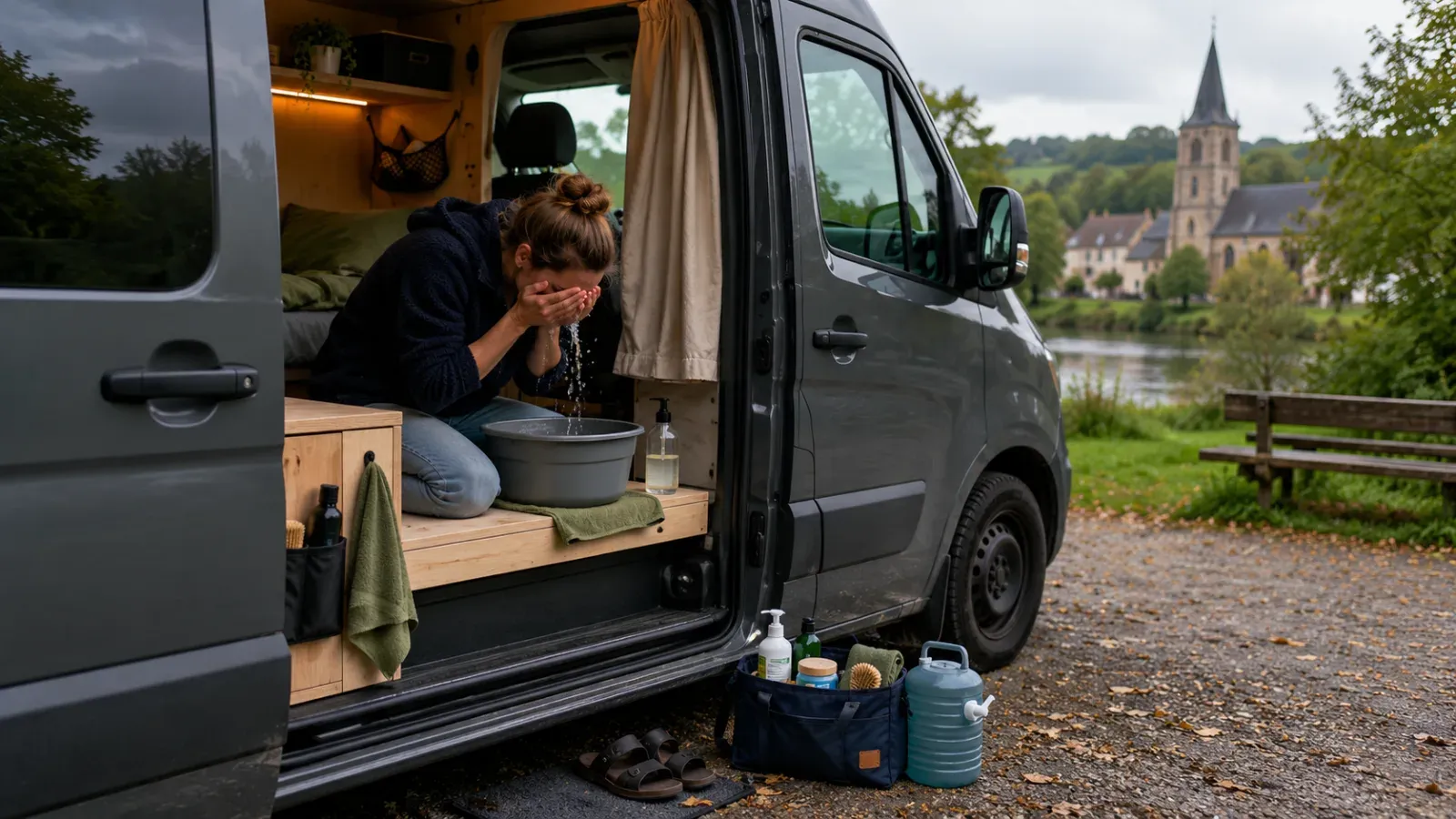
For some, staying clean on the road sounds like one of the biggest downsides of van life. Especially if you don't have a fixed shower in your van. Yet, it doesn't have to be a disaster at all.
You just need to think differently than you would at home.
At home, you step into the shower without a second thought. In a van, hygiene revolves more around small routines: washing with little water, smartly handling wet items, knowing where you can shower, keeping your hands clean, changing your clothes on time, and preventing your van from becoming damp or musty.
A fixed shower in your van sounds luxurious, but it takes up a lot of space, requires a lot of water, makes your van damp faster, and in small vans, it's often less practical than people think. For many Belgian van lifers, a good shower routine without a fixed shower is actually smarter.
You need less water than you think
Staying clean doesn't mean you need a long shower every day. Especially on the road, you can stay fresh with surprisingly little water.
A simple wash with a washcloth, a small towel, and a bit of warm water goes a long way. Face, armpits, feet, and intimate areas are the most important spots. If these are clean, you usually feel a lot fresher.
A small bowl, a collapsible wash basin, or just a bottle of water with a cap can be enough. You don't need to rebuild an entire bathroom to wash yourself.
I find this to be one of those things you truly learn by doing. The first time it might feel primitive, but after a few trips, you realize that with just a liter of water, you can achieve a lot if you're a bit organized.
Make washing a regular routine
The mistake many beginners make is waiting until they feel truly dirty. Then washing suddenly becomes a big task. It's smarter to use small routines.
Wash your feet in the evening before getting into bed. Freshen up your face and armpits in the morning. Wash your hands before cooking. Don't throw wet or sweaty clothes onto your bed. Small things, but they make a big difference.
A good basic routine on the road:
- wash or sanitize hands before cooking
- freshen up face and armpits daily
- wash feet before going to bed
- change underwear and socks frequently
- never leave wet towels crumpled up
- keep dirty laundry separate
- remove waste from the van quickly
That sounds simple, but in a small van, simple is exactly what works.
The washcloth method
The easiest way to stay clean without a shower is the old-fashioned washcloth method.
You will need:
- a small wash basin or bowl
- a washcloth
- a quick-drying towel
- a little water
- mild soap
- optionally, a thermos with warm water
Warm water makes it much more pleasant, especially in autumn or winter. You don't need a boiler for this. Heating a little water on your stove is enough.
Don't use too much soap. The more soap you use, the more water you need to rinse everything off. A mild, quick-rinsing soap works better than thick shower gel.
Important: collect your dirty water. Don't just pour it out in a parking lot, in nature, or next to your van. Even if it's "just a little soapy water," it's still wastewater. Use a grey water tank, a wastewater container, or a designated disposal point where available.
Baby wipes and wet wipes: handy, but not as a main solution
Wet wipes are handy. Especially for quick moments: cleaning hands, wiping feet, freshening up after a walk, or removing mud from your legs.
But they are not a real substitute for washing with water. They sometimes leave a sticky feeling, produce waste, and should not just disappear into nature or the toilet. Even wipes that seem "biodegradable" still belong in the trash bag.
So use them as an emergency solution, not as a daily shower.
A good alternative is a small spray bottle with water and a washcloth. That produces less waste and often feels fresher.
Dry shampoo can help, but don't overdo it
Washing hair is often more difficult than washing your body. Especially with long hair or little water.
Dry shampoo can be useful for a few days, but it's not a miracle cure. After a while, you just really want to wash your hair. A cap, hat, or hair in a ponytail can also solve a lot on the road, but that is, of course, temporary.
For shorter trips, you might not need to plan hair washing at all. For longer trips, you do. Then it's smart to consciously incorporate a shower moment now and then, for example, at a swimming pool, campsite, sports center, hostel, or with friends.
Where can you shower on the road?
Without a fixed shower, you need to know where you can go. Fortunately, there are more options than you think.
Possible shower locations:
- campsites
- camper stops with sanitary facilities
- swimming pools
- sports centers
- gyms
- marinas
- surf clubs or beach showers where permitted
- hostels or budget hotels
- friends or family
- some truck stops or gas stations abroad
In Belgium, swimming pools and sports centers are often the most logical option. You pay admission, perhaps swim for a bit, and then you can shower. Do pay attention to the house rules. You don't enter there as if it's a public bathroom, but as a visitor to the facility.
Campsites are also practical, especially if you want to reset everything: shower, fill up water, empty grey water, wash clothes, and tidy up your van.
For longer trips, I would simply plan shower points. Not every day, but regularly enough to stay fresh and prevent clothes from piling up.
An outdoor shower sounds nice, but isn't always practical
Many people dream of an outdoor shower behind the van. A black shower bag in the sun, a pump, a shower head on the back door, and you're done.
In practice, it's a bit less romantic.
In Belgium, it's often too cold, too windy, too wet, or too busy. You're not always in a place where you can shower half-visibly. And you still have to think about wastewater. Soapy water does not belong just anywhere on the street, in a parking lot, on the roadside, or in nature.
An outdoor shower can be useful for rinsing feet, sandals, dog paws, wetsuits, or muddy items. For a full shower, it's mainly useful on private property, campsites, or places where it's clearly permitted and practical.
With a dog like Grephar, I would find such a simple outdoor rinse very useful, by the way. Not to shower myself every day, but to keep muddy paws or wet items under control before they enter the van.
Showering inside a small van is often more hassle than luxury
A fixed indoor shower seems attractive, but in a small van, it's often one of the least efficient things you can build.
You need water, a pump, a shower tray, drainage, a grey water tank, ventilation, waterproof walls, extra weight, and space. Then everything needs to dry. If you don't do that properly, you'll get moisture problems, odors, and condensation.
In a large camper, a shower can make sense. In a compact van, you really have to ask yourself how often you're going to use it. Many people build a shower and then mainly use it as a wet closet or storage space.
For small Belgian vans, a good washing routine, external shower locations, and possibly a simple outdoor rinse are often more practical.
Hand hygiene is more important than you think
If you cook, eat, refuel, clean up dog poop, use public toilets, shop, and work with water containers on the road, clean hands are really important.
The Department of Care states that proper hand hygiene includes washing hands with water and liquid soap or sanitizing with hand alcohol. On the road, this is very useful advice: wash your hands when you can and use hand gel when water and soap are not available.
So always provide:
- liquid soap
- hand gel
- a small towel or paper
- trash bag
- optionally, a small tap or pressure bottle
Especially before cooking, you don't want to have to search for water or soap. Put it in a fixed place.
Keeping clothes clean without a wardrobe
Clothes get messier on the road faster than at home. Not because you're dirtier, but because everything is closer together.
Therefore, make a clear distinction between clean clothes, worn clothes, wet items, and dirty laundry.
Use separate bags or packing cubes. One for clean clothes, one for dirty laundry, and possibly one breathable bag for worn but still usable clothes. Never put wet items in a sealed plastic bag unless it's temporary. Otherwise, you'll quickly get odors and mold.
Quick-drying clothes are handy, especially socks, underwear, and towels. Cotton feels comfortable but dries slowly. Merino, synthetic material, or light sportswear can be more practical on the road.
Don't take too many clothes. More clothes don't automatically mean less washing. It often just means more clutter.
Towels: small, quick-drying, and never crumpled
A regular thick bath towel is cozy at home, but not ideal in a van. It takes up a lot of space and dries slowly.
A quick-drying microfiber towel or light travel towel works better. Even handier is to have two small towels: one for your body and one for feet, dog, condensation, or dirty jobs.
Always let towels dry. Hang them on a hook, over a chair, on the back door, or on a clothesline when possible. A damp towel left in a bin will make your van musty.
Staying clean also means keeping your van clean
You can wash yourself as much as you want, but if your van remains dirty and damp, you still won't feel fresh.
Therefore, create a small cleaning kit:
- trash bags
- paper towels or cloths
- all-purpose cleaner or mild spray
- sponge
- dish brush
- small brush and dustpan
- microfiber cloth
- clothespins or small clothesline
Especially keep the floor, cooking area, and sleeping area clean. Shoes at the door, bed free of crumbs, and wash cooking utensils immediately. That's not being overly neat; it's just ensuring your small living space remains livable.
Wastewater and soap: be careful
Everything you use to wash yourself has to go somewhere.
Use as little product as possible. Choose mild soap and use no more than necessary. But even with mild soap, you shouldn't just pour your wash water into nature or on the street.
Campsites and terrains often have disposal points for wastewater. Tourism Flanders states that accommodation-related sites can be connected to an internal sewage system or be close to a public wastewater disposal point. Use such facilities when they are available.
In nature reserves, you need to be extra careful. Stricter rules apply there, and it's best not to leave anything behind. No soapy water, no wipes, no waste, no "it will just disappear."
The simple rule: what comes out of your van, you take with you until you can dispose of it correctly.
Swimming is not a shower
Swimming in a lake, river, or sea can be wonderful, but don't see it as a regular shower.
In Flanders, the water quality of official swimming zones is monitored by the VMM and tracked via swimming water information. This does not mean that you can just swim anywhere or wash yourself with soap there. Soap, shampoo, and shower gel do not belong in open water.
If you want to swim, check if it's a permitted swimming zone. If you want to wash yourself, do so with water without products or wait until you have a real shower spot.
Open water is nature, not a bathroom.
A simple hygiene kit for the van
You don't need much. This is a good basic:
- washcloths
- small quick-drying towel
- liquid soap
- hand gel
- toothbrush and toothpaste
- deodorant
- small mirror
- nail clippers
- toilet paper
- wet wipes for emergencies
- spray bottle with water
- collapsible wash basin
- trash bags
- separate laundry bag
- clothesline and clothespins
Keep everything together. Not your soap in the kitchen bin, your toothbrush under the bed, and your towel somewhere in the back. One toiletry bag or hygiene bin makes it much easier.
Example routine for three days without a shower
Suppose you're away for a long weekend without a campsite or fixed shower.
Day 1: you leave home clean. In the evening, wash your face, armpits, and feet. Clothes that are wet or dirty go separately.
Day 2: in the morning, freshen up with a washcloth. After a walk, rinse feet or shoes where possible. In the evening, another quick wash, change underwear and socks.
Day 3: you plan a shower spot, for example, a swimming pool, campsite, sports center, or at home. You put dirty laundry aside and let towels dry thoroughly.
It's not complicated. It works mainly because you don't wait until everything is dirty, damp, and chaotic.
When is it time for a real shower?
A washcloth gets you far, but not indefinitely.
After a few days, you usually just really want to shower, especially in warm weather, after long walks, cycling, sports, or traveling with a dog. That's normal.
Therefore, plan a reset moment in time. A real shower, clean clothes, drying towels, disposing of trash, refilling water, and tidying up the van. After that, your whole van feels more pleasant again.
Van life doesn't have to mean you always have to "suffer." Smart people plan moments of comfort.
Staying clean without a fixed shower is mainly about organization
You don't need a built-in shower to stay fresh on the road. You do need a system.
Wash the most important areas daily, keep your hands clean, use little water, dry wet items immediately, keep dirty laundry separate, and occasionally plan a real shower spot. Don't throw soapy water into nature or parking lots, and use public facilities with respect.
For a small van, this is often better than building in half a bathroom that requires space, weight, and water.
Staying clean on the road is not a matter of luxury. It's a habit. And if you handle that habit well, your van feels much calmer, fresher, and more livable.
Source: https://www.departementzorg.be/nl/handhygiene
Source: https://vmm.vlaanderen.be/beleid/waterbeleid/waterrecreatie/zwemmen-in-open-water
Source: https://kwaliteitzwemwater.be
Source: https://toerismevlaanderen.be/nl/logies/uitbatingsnormen-terreingebonden-logies
Source: https://vmm.vlaanderen.be/beleid/waterbeleid/riolering-en-waterzuivering/aansluiten-of-zelf-zuiveren