Vanlife with a dog: what should you consider beforehand?
Vanlife with a dog sounds like a dream to many. Waking up together in a quiet place, walking in nature, making coffee by the sliding door, and your dog contentedly watching everything move from its basket.
By Laurens De Leeuw · 14 July 2026
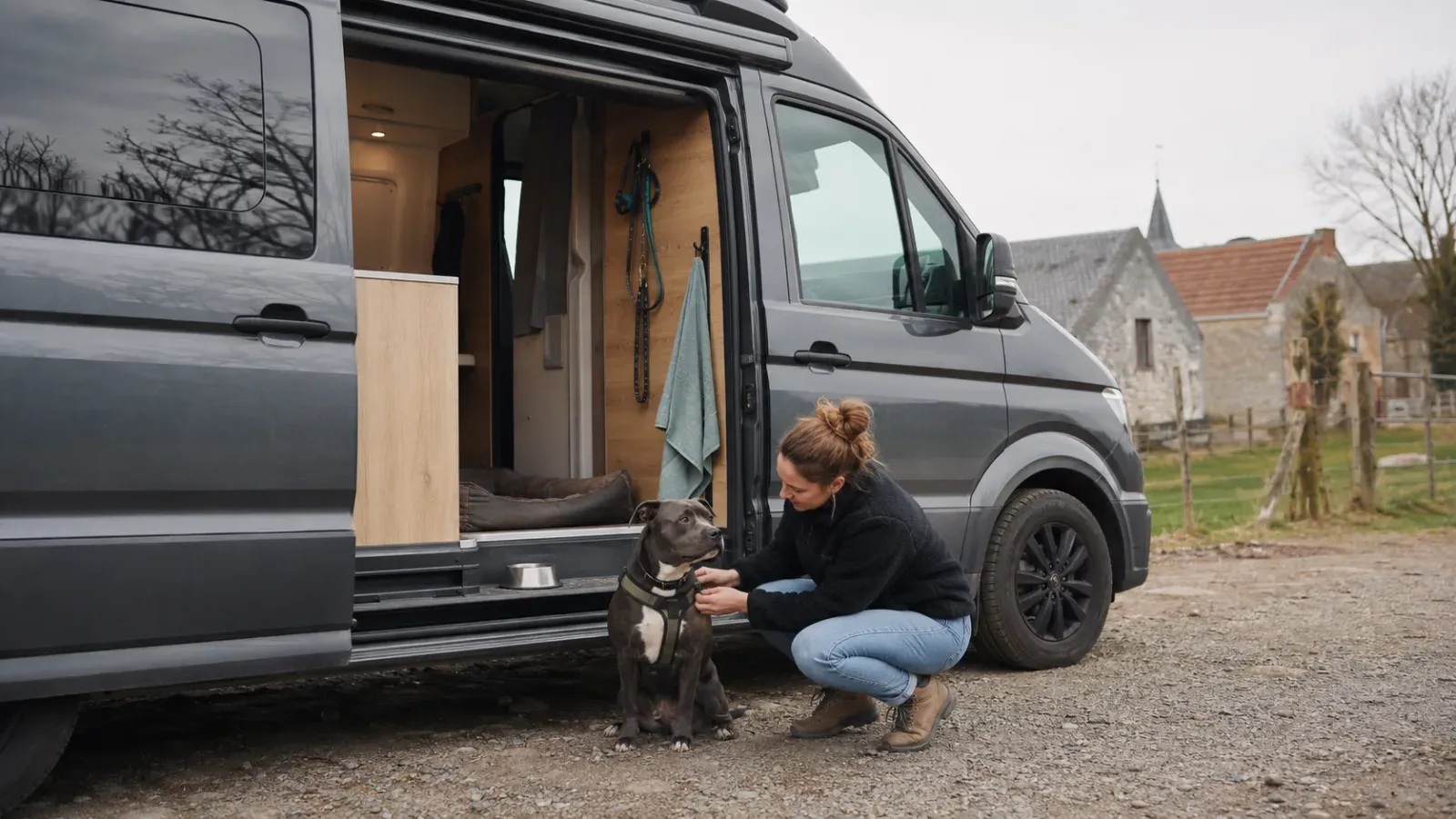
Vanlife with a dog sounds like a dream to many. Waking up together in a quiet place, walking in nature, making coffee by the sliding door, and your dog contentedly watching everything move from its basket.
And honestly? It can truly be blissful.
But taking a dog in your van requires more preparation than just throwing a dog bed in the back. Your dog lives with you in the same small space. They need warmth, rest, water, routine, exercise, safety, and a place where they feel comfortable.
For you, the van is freedom. For your dog, it's primarily a new environment on wheels. And not every dog immediately understands that this is the intention.
Start with your dog, not your van
The first question isn't: does my dog fit in my van?
The first question is: does vanlife suit my dog?
Some dogs are flexible, calm, and love going everywhere. Other dogs quickly get stressed by new sounds, traffic, strangers, other dogs, or constantly changing locations.
So, look honestly at your dog:
- Can they travel calmly in the car?
- Do they easily sleep in new places?
- Are they social enough for campsites and busy car parks?
- Can they stay alone, or do they panic?
- Do they get overheated quickly or cold quickly?
- Do they need a lot of exercise?
- Can they handle strange dogs, children, and noises?
- Do they get car sick?
Vanlife with a dog is only fun if your dog can handle it too. Otherwise, your freedom will quickly be limited by stress, barking, restlessness, or practical problems.
With Grephar, for example, I wouldn't just leave and "see how it goes." I would first do short tests: a few hours in the van, an afternoon nap, an evening walk, one night close to home. Not because I don't trust him, but because a dog needs to clearly learn that the van is a safe place.
Test briefly first
Don't start immediately with a week in the Ardennes or a long drive to France.
Do small tests first:
- a 30-minute drive
- a walk and then resting in the van
- an afternoon in the van while you read or work
- a first night close to home
- a short trip to a campsite or private property
This way, you'll discover what works. Maybe your dog will sleep immediately. Maybe they'll keep staring outside. Maybe they'll bark at every passerby. Maybe they won't eat. Maybe they'll get sick during the drive.
That doesn't mean it can't be done. It just means you need to build up to it.
Documents: microchip, passport, and vaccinations
In Belgium, every dog must be microchipped and registered. A dog must also have a passport. So, check if everything is in order before you leave, especially if you travel frequently or cross borders.
Important:
- your dog must be microchipped and registered
- the data in DogID must be correct
- your dog must have a European pet passport
- you must carry the passport when you travel
- for travel within the EU, a valid rabies vaccination is mandatory
- the rabies vaccination must be given on time and correctly recorded in the passport
Within the EU, rules apply to traveling with dogs, cats, and ferrets. Your dog must be identified, have a European passport, and be vaccinated against rabies. The first rabies vaccination can only be given from 12 weeks of age and is only valid after 21 days. This means a young puppy cannot immediately travel abroad.
If you travel outside Belgium, always check the rules of your destination and of countries you drive through. Some countries have additional requirements. For example, for Ireland, Finland, and Malta, treatment against a specific tapeworm is mandatory within a specific period before arrival.
Sounds boring, but this is really something you don't want to be figuring out in a car park.
Safe transport while driving
A dog should be securely seated while driving. Not loose between the pedals, not on your lap, not freely roaming in the van, and not in a place where they could be thrown through the space in an emergency stop.
In Belgium, there is primarily the general rule that as a driver, you must always have good control of your vehicle. Practically, this means: your dog must not hinder you, distract you, or obstruct your view.
Safe options include:
- a sturdy crate
- a dog seatbelt with a good harness
- a fixed place behind a partition net
- a properly secured transport box
- a safe place where the dog cannot shoot forward
What's best depends on your dog and your van. A small dog in a loose basket is not a safe transport system. A large dog loose in the back can become dangerous for themselves and for you during hard braking.
Prefer a harness over a collar if you're using a seatbelt. In case of a sudden movement, you don't want force on your dog's neck.
Give your dog a fixed spot
In a small van, everything needs a place. Your dog too.
A fixed dog spot provides peace. Your dog knows where they can lie, where they are safe, and where they can go if it gets busy.
This can be a bed, a blanket, a fixed corner under the bed, a crate, or a soft mat between the furniture. It's important that this spot:
- is not in the walkway
- is out of drafts
- does not get too hot in the sun
- is easy to clean
- is safe during driving or separate from the driving area
- is large enough for them to lie comfortably
- does not have to disappear every time you need something
If your dog constantly has to move because you want to open a drawer, go outside, make your bed, or cook, it will become irritating for both of you.
Never leave your dog in a hot van
This is perhaps the most important point of the entire article.
Never leave your dog alone in a hot car or van. Not even "just for a moment." Not even with a window open. Not even in the shade. The temperature can rise much faster than you think.
Flanders warns that the temperature in a car can rise extremely quickly, even at relatively mild outdoor temperatures or in a shady spot.
A van is slightly more spacious than a regular car, but it remains a metal vehicle. In the sun, that space can quickly become dangerously hot. Especially for dogs, who primarily dissipate heat through panting and their paw pads.
Don't just think about hot summer days. Even a sunny spring day can become too hot in a closed vehicle.
Do you need to go somewhere indoors where your dog isn't allowed? Then you need a plan. Don't hope it's "short enough."
Heat planning is mandatory
With a dog, your travel style changes in warm weather.
You park differently. You walk differently. You choose different places. You plan errands differently. You look for shade. You pay attention to asphalt. You check the weather forecast.
A few practical rules:
- walk early in the morning or later in the evening
- avoid hot asphalt, sand, and tiles
- always bring water
- provide shade
- use a cooling mat if necessary
- let your dog rest during warm periods
- don't park your van directly in the sun
- use ventilation, but don't rely solely on it
- plan activities where your dog can come along
In warm weather, test the ground with your hand. If you can't comfortably hold your hand on asphalt or tiles, it's too hot for dog paws.
Dogs with short snouts, older dogs, puppies, sick dogs, and dogs with thick or dark coats are extra sensitive to heat. But actually, any dog can overheat.
Cold also requires attention
Vanlife with a dog isn't just about heat. In Belgium, you also have wet, cold, and windy days.
A dog needs a dry, comfortable resting place. Especially in a van, where moisture can quickly linger. A wet dog blanket, wet paws, and a muddy coat quickly make your van damp.
In cold weather, there are a few things to pay attention to:
- provide a dry sleeping place
- don't let your dog lie on a cold floor
- dry paws and belly after wet walks
- watch out for road salt in winter
- rinse paws after walks on salted roads
- keep older dogs extra warm
- bring an extra dog blanket
- let wet items dry where air moves
Flanders also warns about road salt: cold and salt can cause irritation, wounds, or even burns on dog paws. Rubbing paws before walking and rinsing them afterwards with lukewarm water can help.
Water and food on the go
Water should always be easily accessible. Not somewhere in the back under three boxes.
Bring more water than you think, especially in summer or after long walks. A collapsible water bowl is handy, but also make sure you have a sturdy bowl in the van that won't tip over at every turn.
For food: keep it simple and familiar. Vanlife is not the ideal time to constantly change food. New food, stress, car rides, and irregular days can together cause stomach or intestinal problems.
Handy to bring:
- regular food
- extra portion for emergencies
- fixed food bowl
- water bowl
- sealable food container
- snacks or chew toys
- medication if needed
- copy of medical info
- your vet's number
Let your dog eat calmly. Especially with large dogs, it's wise to avoid strenuous exercise immediately after eating.
Walking and exercise
A dog in a van doesn't automatically have a worse life. On the contrary: many vanlife dogs get more walks, more sniffing time, and more fresh air than at home.
But that doesn't happen by itself.
You need to plan your day around your dog. Not just driving, working, shopping, and then a quick ten-minute walk. A dog needs exercise, sniffing space, and mental stimulation.
Consider:
- short potty breaks during drives
- at least one longer walk per day
- calm sniffing moments
- variety between new places and rest
- enough sleep
- not too many stimuli every day
Some dogs get tired from physical exertion. Others primarily from new impressions. A day at a campsite with people, children, dogs, and noises can be more tiring for your dog than a long walk.
Dogs on a leash
In nature reserves, forests, dunes, on campsites, and in many municipalities, rules apply regarding dogs on a leash. In Flemish nature, you often have to stay on the paths and leash your dog where it is mandatory. On beaches, rules also vary by municipality and season.
So, don't assume your dog can run loose everywhere.
A long leash is often a good compromise. Your dog can sniff and move, but you maintain control. This is especially important in nature reserves, near livestock, wild animals, cyclists, children, and other dogs.
Letting your dog run loose where it's not allowed can result in fines. But apart from fines: it's also just respectful. Not everyone is comfortable with dogs. And not every dog wants to be approached.
Poop bags are not an option, but a basic necessity
Always bring poop bags. Always.
Not just one bag somewhere at the bottom of a purse, but a steady supply in multiple places: in your jacket, on the leash, in the van, in your backpack.
Many municipalities can issue fines if you don't clean up dog poop or don't have bags with you. But apart from fines: it's just basic respect. Especially if we want vanlifers with dogs to remain welcome in car parks, walking areas, and campsites.
Also, don't throw filled bags in nature or next to a bin. Take them with you until you can dispose of them correctly.
Campsites, motorhome pitches, and dogs
Not every campsite or motorhome pitch is equally dog-friendly.
Some allow dogs but require them to always be on a leash. Others have restrictions on the number of dogs, breeds, zones, or periods. Sometimes you pay extra per dog. Sometimes dogs are not welcome in certain buildings, sanitary areas, or beach zones.
So, check beforehand:
- are dogs allowed?
- must your dog always be on a leash?
- are there off-leash areas nearby?
- can your dog come to the terrace or cafeteria?
- are there extra costs?
- are there breed restrictions?
- how busy is the site?
- is there shade?
A campsite that says "dogs allowed" is not automatically great for dogs. Also look at space, walking opportunities, and tranquility.
Leaving alone in the van
This is one of the most difficult parts of vanlife with a dog.
At home, your dog might be able to stay alone calmly. In a van, it's different. New place, outside noises, people passing by, warmer temperature, smaller volume, different smells. This can cause stress.
Some dogs lie calmly. Others bark, whine, scratch, panic, or try to get out.
Build up alone time slowly. First one minute. Then five. Then ten. And always in safe temperatures and conditions.
Don't leave your dog alone if:
- it's warm
- you have no view of the temperature
- they are stressed
- they bark at passersby
- they become destructive
- you can't be back quickly
- you're not sure if dogs are allowed there
For errands or shower moments, you need a plan. Sometimes that means: taking turns if there are two of you. Sometimes choosing a campsite. Sometimes takeaway instead of a restaurant. Sometimes skipping a place.
With a dog, your freedom doesn't get smaller, but it changes.
A clean van with a dog
A dog brings sand, hair, mud, smell, and moisture. That's part of it. But without a system, your van quickly gets dirty.
Provide a fixed "dog zone" by the door:
- towel for paws
- brush
- water bowl
- leash hook
- poop bags
- extra blanket
- dirt mat or rubber mat
- small waste bag
- possibly an old fleece or drying coat
Dry your dog before they go on the bed or in their basket. Especially after rain or beach walks. A wet dog in a small van quickly makes everything damp.
Use washable covers or blankets. Not your nicest cushions. Choose material that can withstand hair, paws, and mud.
A small handheld vacuum cleaner, brush, or microfiber cloth is not a luxury if you often travel with a dog.
Preventing odor
A van quickly smells like what lives in it. Cooking, wet clothes, shoes, moisture, and dog odor easily mix.
To limit dog odor:
- dry wet blankets quickly
- ventilate the van regularly
- wash dog blankets on time
- don't store wet items in closed containers
- keep the sleeping area clean
- brush your dog regularly
- clean up food scraps quickly
- ventilate after rain walks
Odor often arises from moisture. A dry dog blanket smells much less than a damp blanket that has been lying in a corner for three days.
Safety outside the van
Be careful at the sliding door. A dog can suddenly jump out when you open the door.
This is especially dangerous in car parks, along roads, on campsites, or near other dogs. Teach your dog to wait. If necessary, use a short leash attached to a fixed point while opening the door, but never in a way that they could hang themselves or get entangled.
A few habits help:
- leash attached first, then open the door
- dog learns to wait on command
- no loose dog upon arrival at unfamiliar places
- always look around before opening the door
- no long leash where cyclists or walkers can trip
- do not tie the dog to something that can tip over
Especially with large dogs, you need to be consistent here.
What if your dog gets sick on the road?
Make sure you are prepared.
Bring at least:
- European pet passport
- microchip number
- your vet's details
- medication if needed
- tick remover
- tweezers
- disinfectant suitable for animals
- first aid dressing materials
- list of allergies or medical problems
- possibly a muzzle if your dog might react sensitively to pain
For longer trips, research beforehand how to find a vet in the region. In Belgium, this is usually not difficult, but on a Sunday evening or abroad, it quickly becomes stressful.
On the road, watch for signs such as lethargy, not wanting to eat, diarrhea, vomiting, limping, excessive panting, coughing, itching, bald spots, wounds, or strange behavior. If in doubt, call a vet.
Ticks, fleas, and worms
Vanlife means being outdoors a lot. Forests, grass, dunes, fields, walking paths, and campsites. These are also places where ticks, fleas, and worms can play a role.
Discuss prevention with your vet. Not every product suits every dog. Some dogs react sensitively to certain remedies. The travel destination also matters: different risks occur in Southern Europe than in Belgium.
Regularly check your dog for ticks, especially after forest and grass walks. Bring a tick remover and know how to use it.
Adapting your layout to your dog
A dog changes your van layout.
You need space for:
- bed or blanket
- food
- water
- leashes
- towels
- poop bags
- toys
- chew toys
- medication
- wet items
- possibly a crate
That seems little, but in a small van, everything counts.
Don't put the water bowl where you constantly kick it. Don't put the dog in the walkway. Store food in a sealable container. Hang the leash by the door. Make sure you can get out at night without tripping over your dog.
A good dog layout is not beautiful for photos. It is calm, safe, and logical.
Choose places with your dog in mind
A perfect place for you is not always perfect for your dog.
A busy car park with many people can be convenient, but unsettling for a watchful dog. A secluded forest spot can be quiet, but difficult if your dog quickly chases wildlife. A coastal spot can be beautiful, but in summer, beach rules often apply. A city is practical, but not every dog finds tram noises, bicycles, and busy pavements pleasant.
So, look at:
- walking opportunities
- shade
- crowds
- other dogs
- noise
- safe potty area
- ground surface
- temperature
- rules regarding dogs
Sometimes a boring place with a quiet walking path is better than a beautiful place where your dog is constantly tense.
Traveling with a dog is slower
With a dog, you travel slower. And that's not a bad thing.
You stop more often. You walk more. You plan less strictly. You take temperature into account. You can't go everywhere indoors. You often choose nature, peace, and space.
That actually fits very well with vanlife.
But you have to accept it. If your travel style revolves around museums, restaurants, cities, and long driving days, a dog quickly becomes a hassle. If you enjoy walking, living outdoors, and traveling calmly, a dog fits much more naturally into your vanlife.
What to bring?
A practical dog list for the van:
- European pet passport
- leash
- long line
- comfortable harness
- collar with details
- food
- extra food for emergencies
- water bowl
- food bowl
- water bottle for on the go
- bed or blanket
- extra dog blanket
- towel for paws
- poop bags
- chew toys
- toys
- tick remover
- brush
- medication
- first aid supplies
- cooling mat in summer
- warm blanket in winter
- light or reflection for evening walks
- sealable food container
- waste bags
Store important things in fixed places. You don't want to be searching for poop bags when your dog urgently needs to go.
My practical advice
If you want to start vanlife with a dog, don't make it too difficult for yourself and your dog.
Start short. Choose quiet places. Build up alone time slowly. Ensure safe transport. Take documents seriously. Never leave your dog in the heat. Keep water always accessible. Create a fixed dog zone in your van. And accept that your travel rhythm will revolve more around your dog.
For me, a dog is part of the charm of vanlife. Walking, living outdoors, traveling slower, choosing more by feeling. But that only works if you don't pretend your dog is just "extra luggage."
Your dog is a travel companion. Not an accessory.
Vanlife with a dog is primarily about foresight
Vanlife with a dog can be beautiful. You share places, routines, and small moments that you might otherwise miss more quickly. A morning walk in the fog. A dog contentedly lying in its basket after a long day. Sitting outside together with the van open.
But it requires preparation.
Think beforehand about safety, heat, cold, documents, sleeping place, exercise, staying alone, rules, hygiene, and emergencies. Not to make it complicated, but precisely to create peace of mind.
If your dog feels safe and comfortable, your van will also become a home on wheels for them. And then traveling together truly becomes enjoyable.
Source: https://www.vlaanderen.be/huisdierinfo/huisdierwijzers/zoogdieren/hond
Source: https://www.vlaanderen.be/huisdierinfo/verzorging-van-huisdieren/dieren-en-warm-weer
Source: https://www.vlaanderen.be/huisdierinfo/verzorging-van-huisdieren/dieren-en-koud-weer