Wild camping and bivouac zones in Flanders: what is and isn't allowed?
Sleeping freely in nature sounds romantic. A quiet forest edge, an open field, a van at the edge of a nature reserve, or a small tent among the trees. For many, that feels like the essence of freedom. But in Flanders, the rule is quite clear: wild camping in nature is not simply allowed.
By Laurens De Leeuw · 23 June 2026
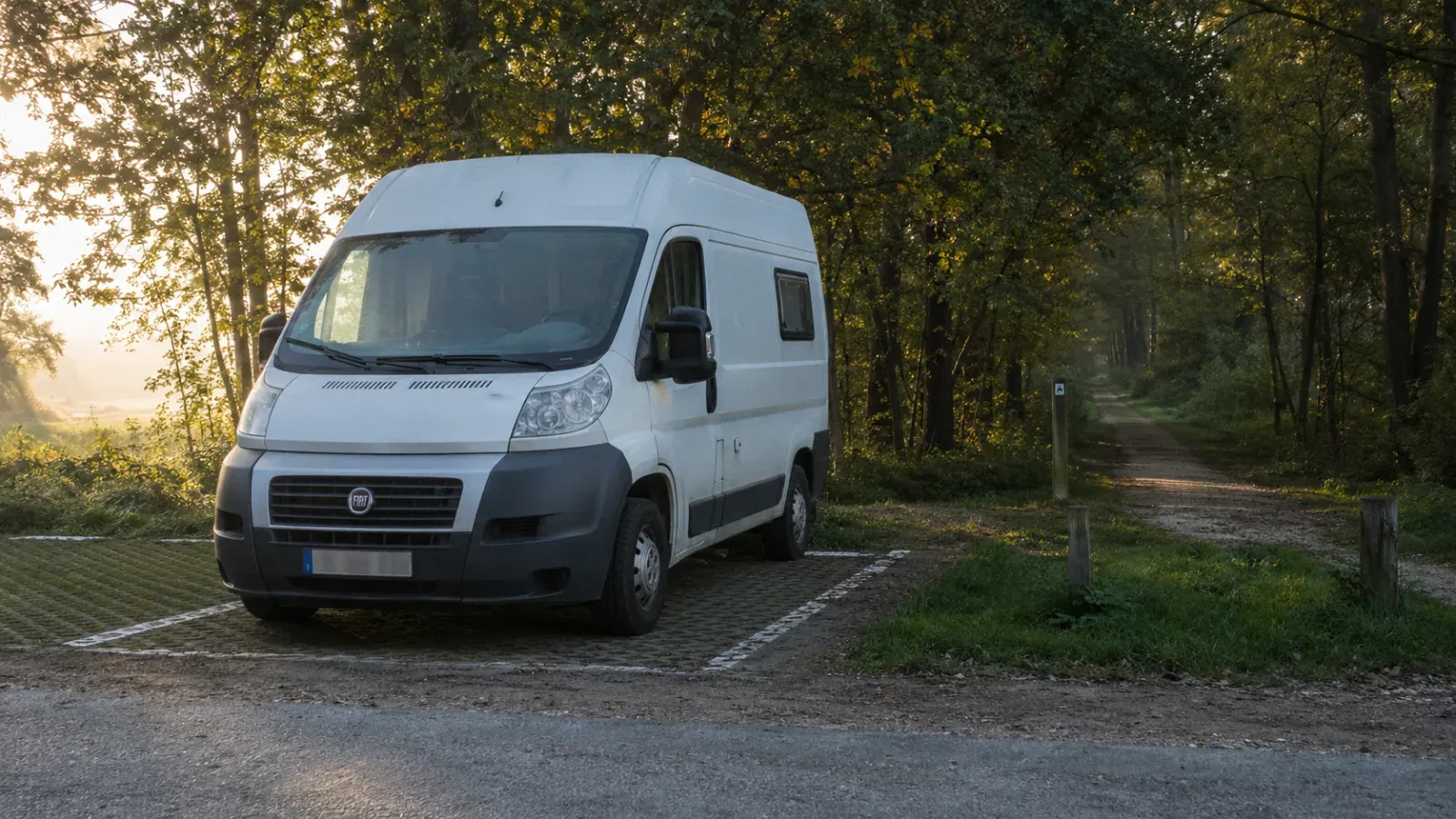
Sleeping freely in nature sounds romantic. A quiet forest edge, an open field, a van at the edge of a nature reserve, or a small tent among the trees. For many, that feels like the essence of freedom.
But in Flanders, the rule is quite clear: wild camping in nature is not simply allowed.
That doesn't mean you can't spend a simple night in nature anywhere. There are official bivouac zones where you can legally, simply, and briefly stay overnight. However, these are not intended as free camper spots or vanlife parking areas. They have their own rules, limitations, and purpose.
For vanlifers, this is an important distinction. A bivouac zone is not the same as a campsite, nor is it the same as a place where you can stay with your van.
Wild camping in Flemish nature is not simply allowed
Natuur en Bos (Nature and Forest Agency) states it very clearly: wild camping or simply pitching your tent in nature is not allowed in Flanders. Anyone wishing to stay overnight in a forest, nature reserve, heathland, dune area, or other protected piece of nature may not do so on their own initiative.
This also applies if you are very careful. Even if you make no noise, make no fire, and leave everything tidy, the basic principle remains the same: you are not simply allowed to choose a spot to stay overnight in nature.
The reason is logical. Flemish nature reserves are often small, vulnerable, and heavily visited. If everyone were to sleep anywhere, paths, forest edges, plants, animals, and quiet zones would quickly come under pressure.
What is a bivouac zone then?
A bivouac zone is an official place where you can stay overnight briefly and simply in nature. It is therefore not a regular campsite, not a campervan site, and not a place to set up a full camp.
The idea behind a bivouac zone is simple: hikers and cyclists get the chance to sleep close to nature for one night during a trip, without luxury and without disturbing nature.
Natuur en Bos also describes the difference between camping and bivouacking quite clearly. Camping is more about staying somewhere, settling in, and doing activities in that spot. Bivouacking is more about a simple overnight stay in silence and simplicity.
That difference is important. A bivouac zone is not a place to hang around for a weekend, set up a large setup, play music, or cook extensively outdoors as if you were at a campsite.
You must make a reservation
A common mistake is thinking that you can just go to a bivouac zone and pitch your tent there. For the bivouac zones of Natuur en Bos, you must first reserve a spot. This reservation is free, but mandatory.
This is not just administrative. The system ensures that capacity remains limited, so that a bivouac zone does not become a busy campsite. There is only room for a limited number of people and tents. This keeps the impact on nature smaller and the experience peaceful for everyone.
So never go to a bivouac zone on a whim with the idea "there will surely be space". Check in advance whether a reservation is required and follow the rules of the specific bivouac zone.
Bivouac zones are usually for those who come on foot or by bike
For Vanlife Belgium, this is perhaps the most important point: a bivouac zone is generally not intended for people who come by car, campervan, or van.
Natuur en Bos states that bivouac zones in their nature reserves are accessible on foot or by bike. Bivakzone.be also describes a bivouac zone as a recognized, legal place where you can stay overnight briefly, without luxury, and discreetly in your own tent, intended for those traveling on foot or by bike, not by car.
This means that you are not allowed to park your van at the edge of a bivouac zone and then sleep there as if it were a campervan site. Leaving your vehicle in a forest parking lot and then "just" using the bivouac zone as if you were on a trip with your van also does not fit the purpose of the system.
So a bivouac zone is mainly interesting for vanlifers who legally park or leave their bus somewhere, and then truly continue as a hiker or cyclist with a tent. But even then, you must carefully check whether that is allowed in that specific location.
A van is not a tent
Vanlifers sometimes think: if a tent is allowed in a bivouac zone, then sleeping in my bus should also be allowed, right? Legally and practically, that is not the same.
A bivouac zone is a delimited place in nature, usually without car access. The rules are built around people who come on foot or by bike and bring a small tent. A van, campervan, or car normally does not belong there.
Moreover, sleeping in your vehicle in a parking lot near a nature reserve falls under different rules than bivouacking in an official bivouac zone. In such a parking lot, parking regulations, local police regulations, nature rules, and any prohibition signs may apply. The fact that you are close to a bivouac zone or nature reserve does not automatically make your parking lot an allowed overnight stay location.
What is usually not allowed?
The precise rules may vary per bivouac zone, but the basic principle is the same everywhere: simple, brief, and with respect for nature.
What usually does not fit within bivouacking:
Setting up chairs and tables as if you were at a campsite. Setting up an awning or tarp outside the permitted zone. Playing music. Making a fire where it is not explicitly allowed. Leaving trash behind. Discharging dishwater or toilet water. Staying multiple nights without permission. Bringing large groups without permission. Driving to the bivouac zone by car or van. Parking your bus next to or in a nature reserve to stay overnight there without explicit permission.
It sounds strict, but the reason is simple. Bivouac zones exist precisely because they remain small, quiet, and limited. If people start using them as free campsites, they will disappear sooner or later.
What is allowed then?
What IS the intention: you reserve in advance, you come on foot or by bike, you pitch a small tent where allowed, you stay briefly, you keep it quiet, you only use the provided space, and you leave the place cleaner than you found it.
Bivouacking is about simplicity. No full setup, no comfort show, no "vanlife content shoot", but just a quiet night in nature.
For many, that is precisely the charm. You bring little, sleep simply, wake up among the trees, and leave again without a trace.
Wild camping with your van near nature reserves is not a good idea
For vanlifers, it is tempting to see a forest parking lot, dirt road, or parking lot near a nature reserve as an ideal sleeping place. Especially if it is quiet and there are no houses nearby.
However, that is precisely the kind of place where you should be careful. Many nature parking lots are intended for daytime visitors, not as overnight accommodation. Municipalities, managers, or police zones can impose additional rules. Sometimes there are signs with opening hours, parking bans after sunset, prohibitions on overnight stays, or prohibitions on camping.
Even if there is no sign, that does not automatically mean that staying overnight with your van is allowed. In a nature context, it is always safer to start from the principle: only stay overnight where it is clearly allowed.
What if you still want to stay overnight in nature?
If you really want to sleep in nature, choose an official bivouac zone and follow the rules. If you want to stay overnight with your van, choose an official campervan site, campsite, private property with permission, or a place where overnight stays are explicitly allowed.
That may be less adventurous than just stopping anywhere, but it keeps the places open, prevents fines, and ensures that vanlifers are not seen as a nuisance.
There are enough ways to experience freedom without breaking the rules. A beautiful day hike, a bivouac night with a reservation, a legal campervan site near nature, or a private spot with a farmer or private individual can just as well provide that feeling of peace.
Why this is important for Vanlife Belgium
Vanlife in Belgium only has a future if we show that it can be respectful. Belgium is not a vast country with endless wilderness. Our nature is small, shared, and often vulnerable. If we treat these places as if they are free campsites, there will only be more prohibition signs.
That is why this is an important basic principle for the community: do not use nature as a free campsite.
Park correctly. Only sleep where allowed. Do not put anything outside where it does not belong. Leave no trash. Respect silence. And use bivouac zones for what they are intended: short, simple overnight stays for hikers and cyclists, with a reservation.
Conclusion
Wild camping in Flemish nature is not simply allowed. So you may not choose a forest edge, field, dune, or nature reserve yourself to pitch your tent or stay overnight with your van.
What does exist are official bivouac zones. These are intended for short, simple overnight stays in nature, usually for people traveling on foot or by bike. For the bivouac zones of Natuur en Bos, you must reserve in advance.
For vanlifers, the most important rule is simple: a bivouac zone is not a campervan site. If you want to sleep with your van, look for a place where overnight stays with a vehicle are clearly allowed. If you really want to sleep in nature, use an official bivouac zone and follow the rules.
This way, it remains fun, legal, and respectful for everyone.
Source: https://toerismevlaanderen.be/nl/logies/uitbatingsnormen-camperterrein
Source: https://toerismevlaanderen.be/nl/logies/uitbatingsnormen-camping
Source: https://toerismevlaanderen.be/nl/logies
Source: https://natuurenbos.be/natuurgebieden/meerdaalwoud-en-heverleebos
Source: https://natuurenbos.be/activiteiten/bivakzone
Source: https://natuurenbos.vlaanderen.be/faq/mag-ik-kamperen-een-bos-natuurgebied
Source: https://www.bivakzone.be/